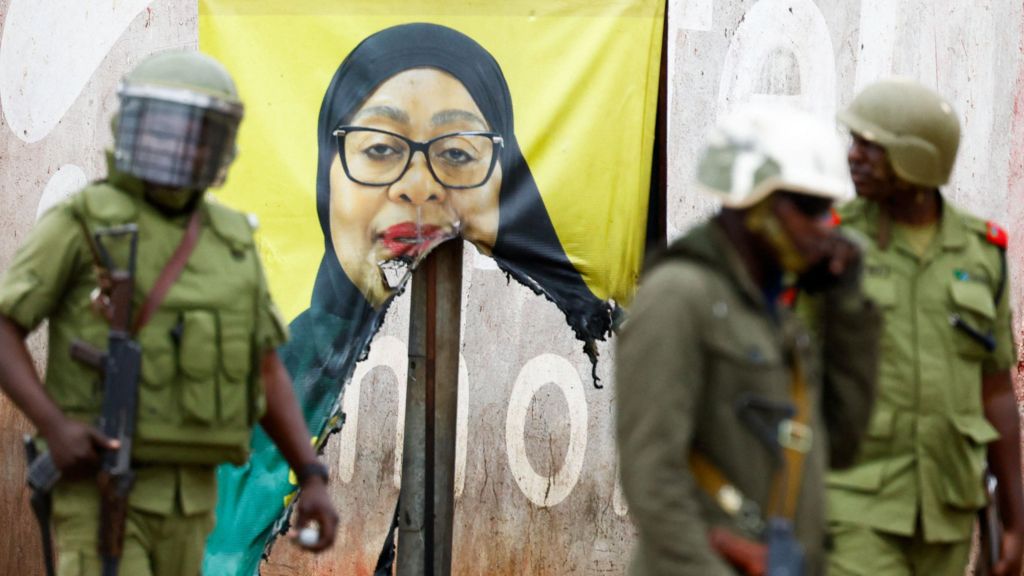
Tanzania has decided to cancel its upcoming independence celebrations, redirecting funds to rebuild infrastructure damaged during recent election-related unrest. Prime Minister Mwigulu Nchemba announced the decision amidst growing calls from opposition groups for mass demonstrations on December 9, the country’s independence day, to protest alleged killings following last month’s disputed election. The opposition claims hundreds died in a government crackdown, though no official death toll has been released. A commission of inquiry has been established to investigate the incidents. President Samia Suluhu Hassan secured a landslide victory with 98% of the vote, a result the opposition has labeled a ‘mockery of democracy.’ Key opposition leaders, Tundu Lissu and Luhaga Mpina, were barred from contesting the election—Lissu remains detained on treason charges, while Mpina’s candidacy was rejected on technical grounds. Election observers have raised concerns about vote manipulation and the election’s failure to meet democratic standards. The government imposed a five-day internet blackout starting on election day, October 29, and warned against sharing protest-related images. Despite this, graphic footage of the unrest has circulated widely online, with international media verifying its authenticity. The government has dismissed these portrayals as attempts to tarnish Tanzania’s image, maintaining that the country remains safe. Government spokesman Gerson Msigwa stated that the inquiry commission would clarify the events, though concerns about its independence persist. Over 240 individuals were charged with treason following the protests, but President Samia later urged prosecutors to show leniency, leading to some releases. In his announcement, Nchemba appealed for unity and dialogue, urging Tanzanians to avoid violence. President Samia, Tanzania’s first female president, initially gained praise for easing political repression, but critics argue that the political environment has since tightened.