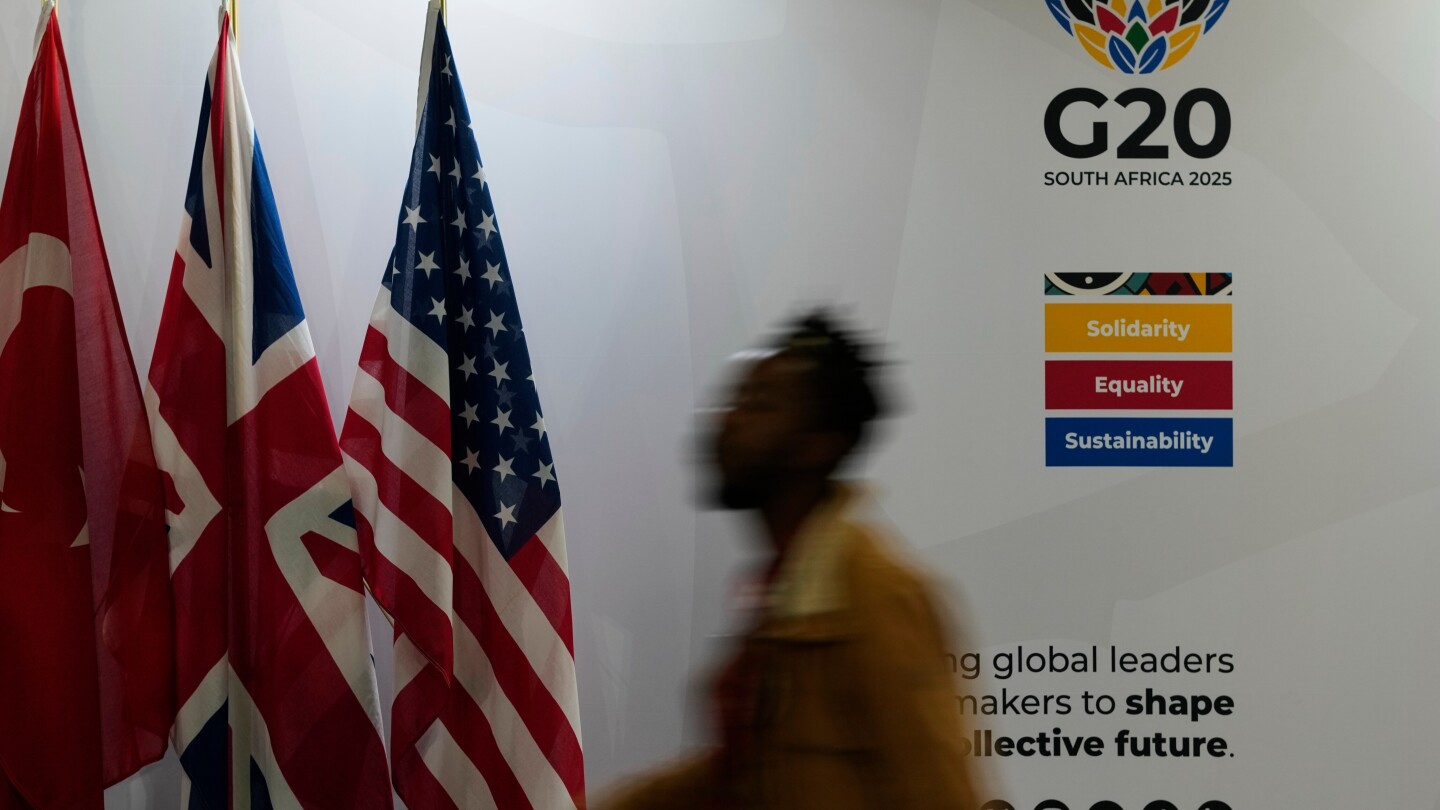
The inaugural Group of 20 (G20) summit held in Africa concluded on Sunday, marking a historic shift by placing the concerns of developing nations at the forefront of the bloc’s agenda. Hosted by South Africa, the summit culminated in a declaration signed by some of the world’s wealthiest and emerging economies, committing to address critical issues affecting poorer countries. These include the disproportionate impact of climate change, escalating debt burdens, and the urgent need for equitable access to green energy transitions. However, the United States, a founding G20 member and the world’s largest economy, notably boycotted the event, refusing to endorse the declaration. The Trump administration has openly criticized South Africa’s agenda, particularly its focus on climate change. With the U.S. assuming the G20 presidency immediately after the summit, the long-term implications of the Johannesburg declaration remain uncertain. The 122-point declaration, while non-binding, signals a consensus among participating nations to mobilize public and private financing to aid developing countries in recovering from climate-related disasters. Africa, which contributes only 2-3% of global emissions, faces some of the most severe consequences of climate change, as evidenced by recent devastating cyclones in Mozambique, Malawi, and Zimbabwe. Leaders from developing nations, including Sierra Leone’s President Julius Maada Bio, highlighted the unfair borrowing conditions they face, with interest rates up to eight times higher than those for wealthier countries. Despite the summit’s achievements, questions linger about the G20’s effectiveness in addressing global crises, such as the war in Ukraine and the Sudanese civil war, which received minimal attention in the declaration. The summit concluded with an awkward moment as South African President Cyril Ramaphosa handed over the symbolic G20 gavel to Brazil’s President Luiz Inácio Lula da Silva, as no U.S. representative was present due to the boycott. The U.S. had proposed sending a junior embassy official, which South Africa deemed disrespectful. Looking ahead, the G20’s trajectory under U.S. leadership appears starkly different, with the Trump administration criticizing South Africa’s inclusive approach and suggesting a return to a more streamlined G20 framework. The summit’s outcomes underscore the growing divide between developed and developing nations, as well as the challenges of fostering global cooperation in an increasingly polarized world.
Takeaways from the first G20 summit in Africa and a look ahead to the next one at Trump’s golf club