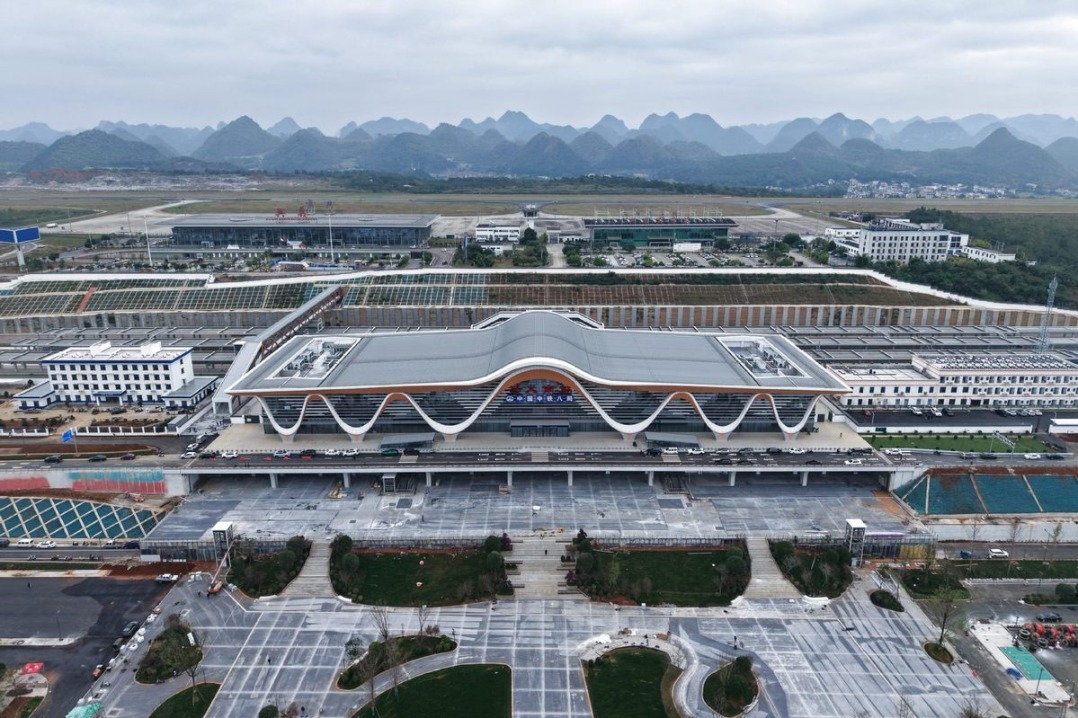
A groundbreaking high-speed rail line in Guizhou province, Southwest China, is poised to revolutionize the region’s tourism industry. Scheduled to commence operations by the end of November 2025, this 99-kilometer route will link Panzhou and Xingyi, integrating all city-level administrative regions in Guizhou into the national high-speed rail network. Designed to operate at 250 km per hour, the line will intersect with the existing Shanghai-Kunming high-speed railway, placing Xingyi—the capital of the Qianxinan Bouyei and Miao autonomous prefecture—on the high-speed rail map. This development is expected to significantly enhance accessibility to Guizhou’s renowned natural landscapes and rich ethnic cultures, which have long been a draw for tourists. However, the region’s mountainous terrain has historically limited travel options, often necessitating transfers through the provincial capital, Guiyang. The new rail line will reduce travel time between Xingyi and Guiyang to approximately two hours, fostering new growth opportunities for local tourism. Zhou Ying, deputy mayor of Xingyi, emphasized that the rail line’s opening will fully integrate Xingyi into the national high-speed network, injecting robust momentum into the city’s tourism sector. Ma Yucan, general manager of Xingyi Wanfenglin Tourism Industry Operation Co, highlighted the transformative impact on visitor experience, noting that high-speed rail will eliminate the need for lengthy bus journeys to popular destinations like the Wanfenglin Scenic Area. Local businesses, including innkeeper Wang Xiyun, are already preparing for an anticipated surge in visitors, with scenic area statistics projecting a daily increase of around 30,000 tourists. The rail line is also expected to bolster Guiyang’s role as a provincial tourism hub, offering national and international connectivity. According to Liu Weidong, deputy Party secretary of Guizhou Railway Investment Group, the project will create a one-to-two-hour high-speed travel circle connecting Guiyang with eight other prefectural centers, enhancing regional rail networks, promoting economic development, and strengthening interregional connectivity. This initiative is set to support Qianxinan’s integration into Guizhou’s broader socio-economic framework, fostering ecological protection, tourism, and economic growth.