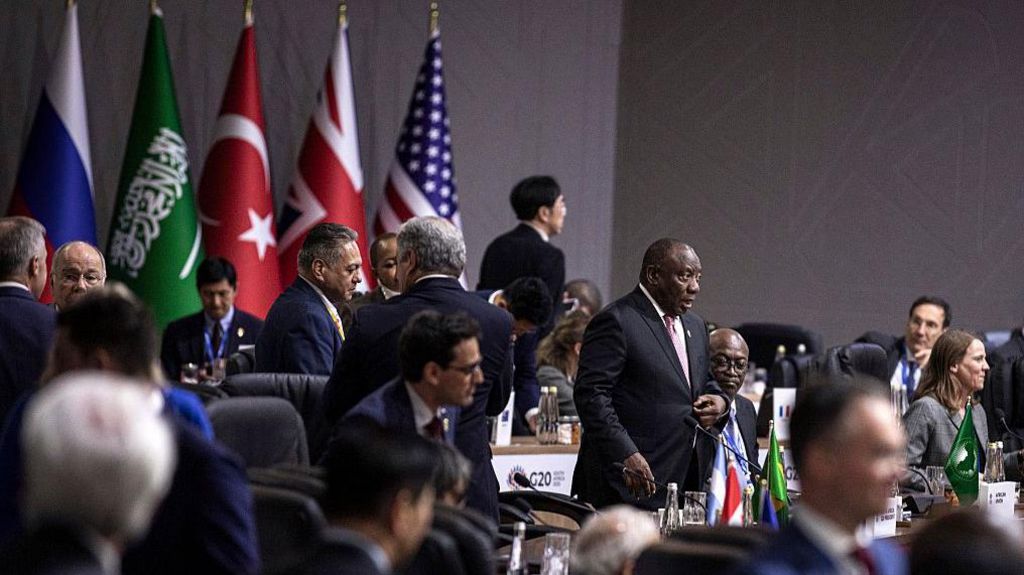
The recent G20 summit in South Africa, a pivotal gathering of the world’s leading economies, culminated in a joint declaration emphasizing ‘multilateral cooperation.’ This declaration, which addressed critical issues such as climate change mitigation and economic inequality, was adopted despite the absence of the United States, which boycotted the event in Johannesburg. South African President Cyril Ramaphosa, speaking at the closing ceremony, highlighted that the agreement underscored ‘shared goals’ that transcended national differences. The US decision to abstain was rooted in controversial claims regarding the treatment of South Africa’s white minority, assertions that have been widely discredited. This summit marked the first time the G20 was hosted on African soil, following recent editions in Indonesia, India, and Brazil. The US is slated to host the next summit in 2026, with plans to hold it at President Trump’s golf course in Florida. Notably, the ceremonial handover of the G20 presidency, typically conducted at the summit’s conclusion, was postponed and is expected to occur next week involving junior officials. Brazilian President Luiz Inácio Lula da Silva remarked on the resilience of multilateralism, stating it was ‘more alive than ever,’ while German Chancellor Fredriech Merz criticized the US decision to abstain as ‘not a good decision.’ Merz also observed a global realignment and the formation of new alliances. Delegates achieved consensus on fostering ‘just, comprehensive, and lasting peace’ in regions including Ukraine, Sudan, the Democratic Republic of Congo, and the ‘Occupied Palestinian Territory.’ The inclusion of Sudan in the discussions was particularly significant, as noted by Sudanese commentator Saeed Abdalla, who highlighted the G20’s newfound focus on the Sudan conflict after more than two years of neglect.