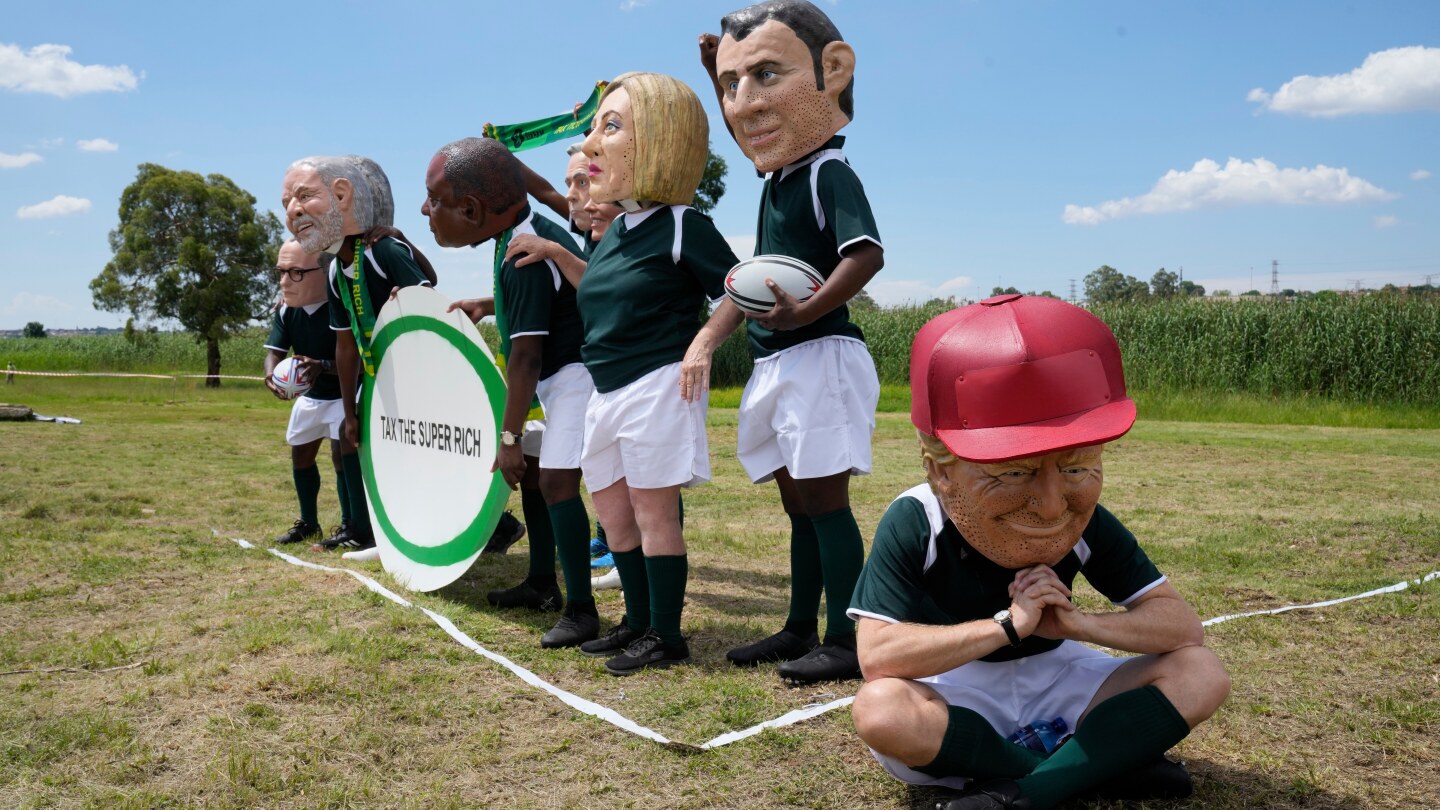
The G20 summit in Johannesburg, South Africa, concluded on Sunday amidst heightened diplomatic tensions between the host nation and the United States. The dispute arose when South Africa refused to conduct the traditional handover of the G20 presidency to a U.S. official, citing the absence of a high-level representative from the American delegation. South African Foreign Minister Ronald Lamola emphasized that the summit is a leaders’ meeting, requiring representation at the level of a head of state, special envoy, or minister. The U.S., which is slated to assume the G20 presidency in 2026, had planned to host its summit at President Donald Trump’s golf club in Doral, Florida. However, South Africa deemed the proposed handover ceremony inappropriate and postponed it to a later date, possibly at its foreign ministry building.
The rift deepened when South African President Cyril Ramaphosa accused the U.S. of last-minute changes to its participation plans, a claim denied by the White House. White House Press Secretary Karoline Leavitt criticized Ramaphosa for his comments, further straining relations. The summit also saw South Africa break with tradition by issuing a leaders’ declaration on the opening day, focusing on climate change and global wealth inequality. While the U.S. and Argentina opposed the declaration, other G20 members, including China, Russia, and several European nations, supported it. The declaration called for increased financial aid for poor countries recovering from climate-related disasters, debt relief, and support for their transition to green energy.
Despite the symbolic significance of the summit, questions remain about the G20’s effectiveness in addressing global crises such as the Russia-Ukraine war and Middle East tensions. The 122-point declaration made only a passing reference to Ukraine, highlighting the bloc’s struggle to achieve consensus on geopolitical issues. French President Emmanuel Macron acknowledged the milestone of the first African G20 summit but noted the group’s challenges in establishing a unified stance on crises. Activists, however, praised the summit for centering attention on inequality and development priorities from an African perspective, marking a historic moment for the G20.