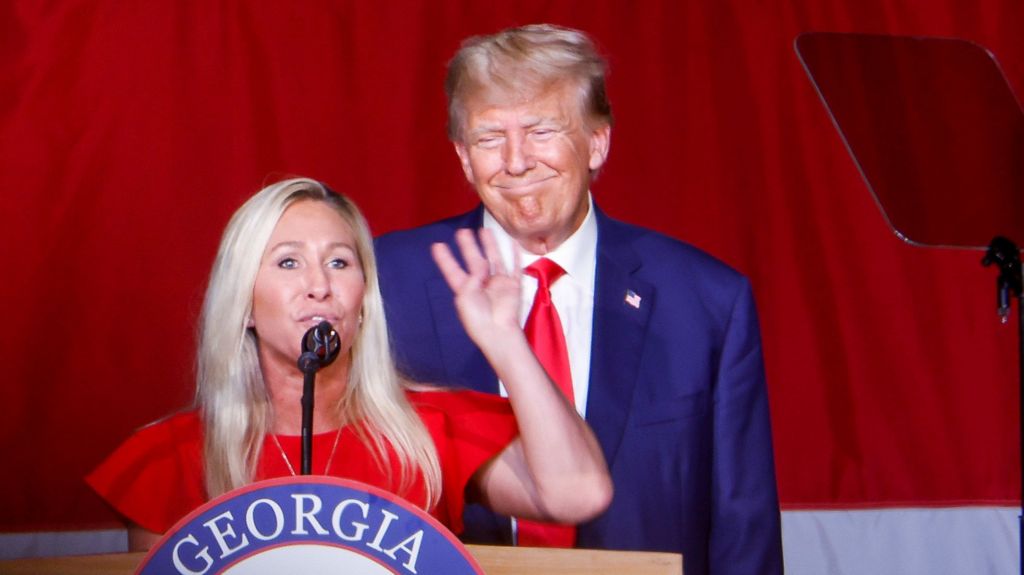
Marjorie Taylor Greene, once a fervent ally of Donald Trump, has experienced a dramatic public fallout with the former president, culminating in her resignation from Congress. Greene, who entered Congress as a staunch defender of Trump, supported his claims of a “stolen” 2020 election even as many Republicans distanced themselves. However, over the past five years, their relationship deteriorated significantly, with Greene ultimately being labeled a “traitor” by Trump. The rift began with Greene’s criticism of Trump’s foreign policy decisions, including airstrikes on Iran and his stance on Israel during the Gaza War. The final break occurred over Trump’s handling of the Jeffrey Epstein case, with Greene condemning his reluctance to release Justice Department files and aligning with Epstein’s victims and Democrats to push for a House vote. Greene also challenged Republican strategy during the government shutdown, advocating for healthcare subsidies for low-income Americans and criticizing Trump’s focus on foreign policy over domestic economic concerns. In her resignation statement, Greene accused the “MAGA Inc.” movement of being co-opted by elites and vowed to chart a new path. Despite her controversial past, including promoting QAnon conspiracy theories and clashing with both Democrats and Republicans, Greene’s influence in Washington was bolstered by her ties to Trump. Now, as she steps away from Congress, Greene leaves open the possibility of a political comeback in Georgia, where Republican leaders have shown success without Trump’s backing. Her departure marks a significant moment in the evolving dynamics of the Republican Party as it navigates a post-Trump era.