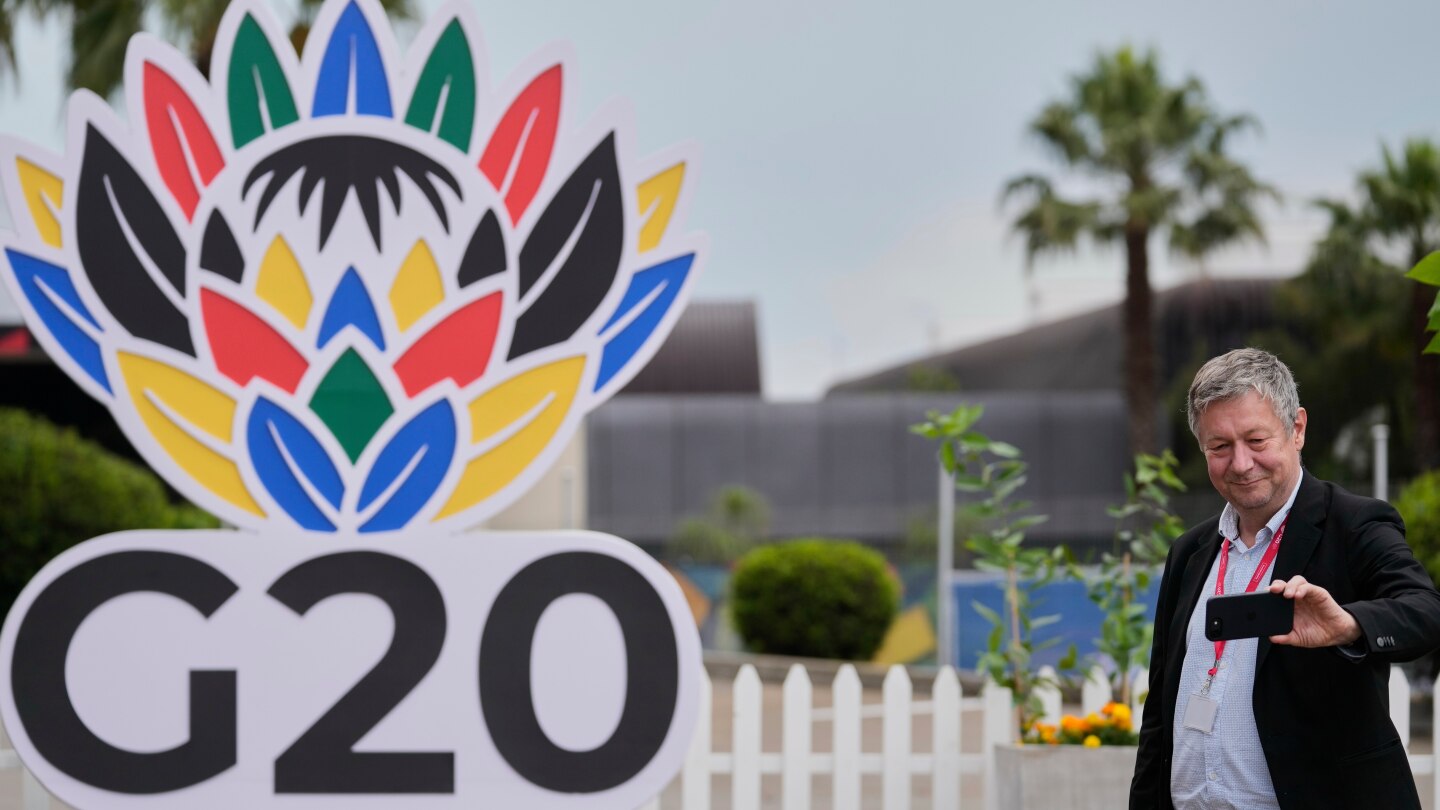
The inaugural Group of 20 (G20) summit hosted in Africa commenced on Saturday in Johannesburg, South Africa, with a bold agenda aimed at addressing persistent challenges faced by the world’s poorest nations. Leaders and top officials from the world’s wealthiest and emerging economies gathered near Soweto, a historic township once home to Nelson Mandela, to seek consensus on key priorities outlined by the host country. These include aiding poor nations in recovering from climate-related disasters, reducing foreign debt burdens, transitioning to green energy, and leveraging critical mineral resources to combat global inequality. United Nations Secretary-General António Guterres expressed cautious optimism, acknowledging South Africa’s efforts in spotlighting these issues. However, the summit faced a significant setback as U.S. President Donald Trump ordered a boycott, citing claims of South Africa’s anti-white policies. This diplomatic rift threatened to overshadow the event, though leaders like French President Emmanuel Macron emphasized the need to move forward despite the absence. The G20, comprising 19 nations, the European Union, and the African Union, was established in 1999 to bridge the gap between rich and poor nations during global financial crises. Despite its influence—representing 85% of the global economy and over half the world’s population—the G20 operates on consensus, often hindered by conflicting member interests. Guterres warned that wealthy nations have historically failed to make necessary concessions for effective global reforms. The summit’s traditional leaders’ declaration faced uncertainty, with South Africa resisting U.S. pressure to issue a unilateral statement. President Cyril Ramaphosa vowed not to be intimidated, promising a collective declaration. As the U.S. prepares to assume the G20 presidency, the bloc’s focus on climate change and inequality may shift sharply under the Trump administration. The U.S. will only participate in the formal handover ceremony, a move South Africa deemed insulting.
Africa’s first G20 summit opens with an ambitious agenda and tries to move on from Trump’s boycott