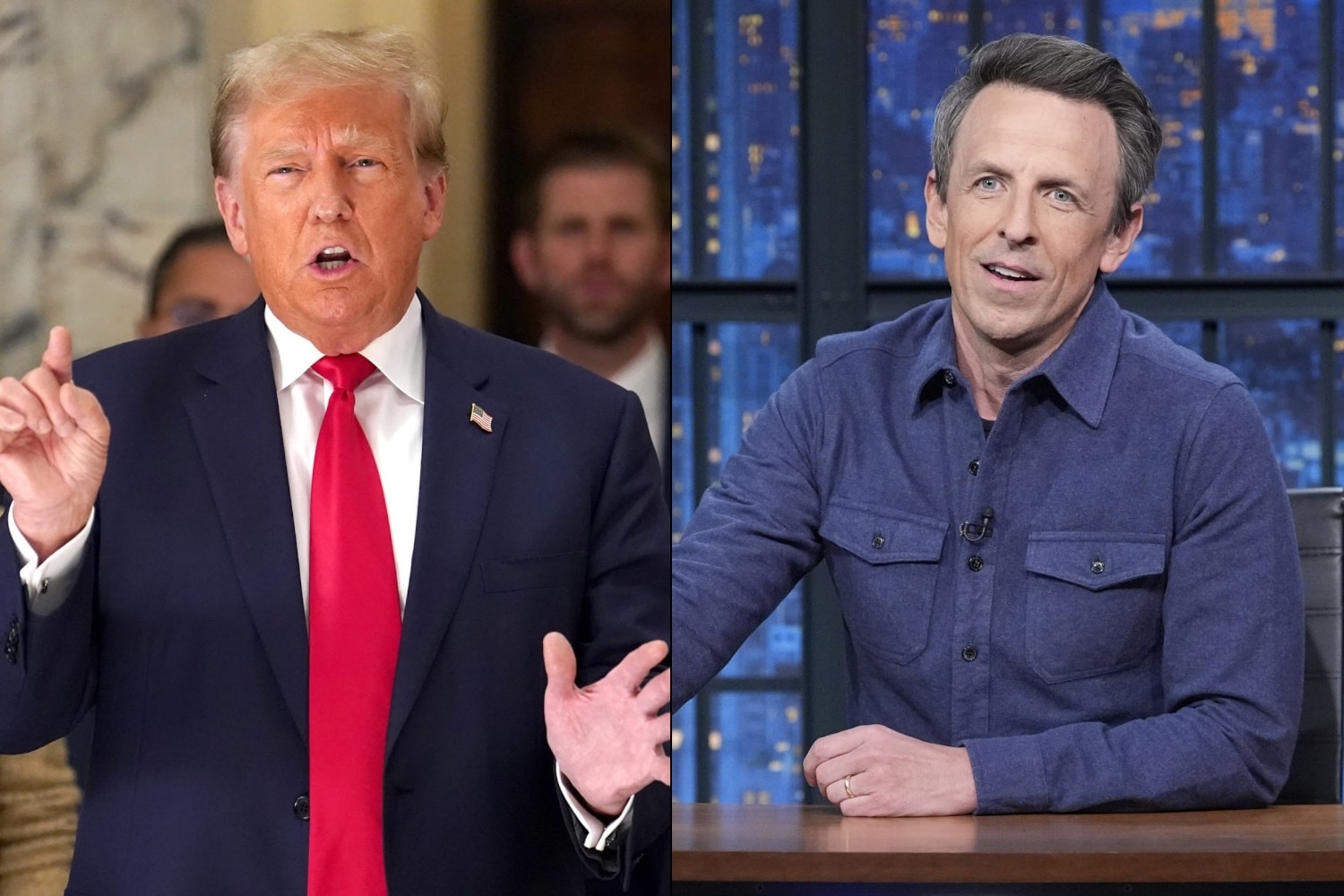
Former President Donald Trump’s recent clash with comedian Seth Meyers has reignited discussions about the boundaries of free speech in the United States. Trump, known for his hypersensitivity to criticism, took to Truth Social to label Meyers’ monologue as “100% ANTI TRUMP, WHICH IS PROBABLY ILLEGAL!!!” He later called for NBC to fire Meyers, a move that was reposted by the chair of the Federal Communications Commission. This incident is part of a broader pattern of Trump’s confrontations with entertainers and comedians, including Taylor Swift, Bruce Springsteen, Jimmy Kimmel, and Stephen Colbert, who have criticized his administration. The situation has raised concerns about the erosion of one of the fundamental tenets of American democracy: freedom of speech. Democrat Senator Edward Markey introduced a resolution rebuking Trump for suggesting that criticism of the president could be illegal, emphasizing that such criticism is a constitutional right and a democratic duty. Republicans blocked the resolution, and Trump’s actions have drawn comparisons to the ancient law of “crimen maiestatis,” which protected Roman emperors from insults, and its later incarnation as “lèse-majesté,” which shielded European monarchs. The debate over free speech has historical precedents, including the Sedition Act of 1798, which criminalized criticism of the president and government, and was so unpopular that it contributed to John Adams’ loss in the 1800 presidential election. The principle of free speech, enshrined in the First Amendment, remains a cornerstone of American democracy, but its preservation requires vigilance. As Lyndon Johnson once remarked, being the target of satire is “part of the price of leadership” in a free nation.