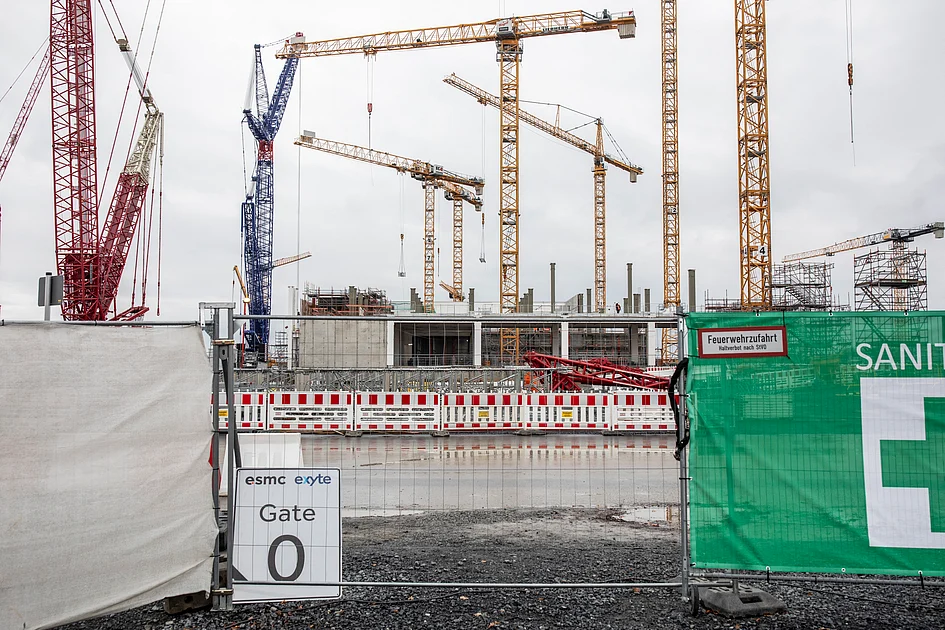
Europe’s aspirations to bolster its semiconductor industry are encountering significant challenges as it seeks to reduce its reliance on global supply chains. Currently, Europe produces less than 10% of the world’s advanced chips, a figure that European officials aim to double by 2030 with the assistance of Taiwan Semiconductor Manufacturing Co. (TSMC). This ambitious goal comes in response to supply chain disruptions during the COVID-19 pandemic and geopolitical tensions surrounding Taiwan, which dominates global chip production. Germany, alongside the United States and Japan, is investing heavily in domestic chip manufacturing. A joint venture between TSMC and European chipmakers, including Bosch, Infineon, and NXP, is constructing a €10 billion ($11 billion) facility near Dresden, expected to commence operations in 2027. The project aims to transform the region into a hub for semiconductor innovation, dubbed “Silicon Saxony.” However, the initiative faces obstacles such as complex permitting processes, labor laws, and environmental regulations. Additionally, Taiwanese suppliers supporting TSMC’s operations in Europe are grappling with visa issues, language barriers, and cultural integration. The high costs of building factories in Europe, nearly double those in Taiwan, further complicate the endeavor. Despite these challenges, European officials remain optimistic, viewing the TSMC project as a catalyst for job creation and economic growth. Meanwhile, concerns persist in Taiwan about the potential dilution of its semiconductor dominance as TSMC expands globally. Former Taiwanese President Tsai Ing-wen recently visited the Dresden site, urging Taiwanese engineers to remain connected to their homeland while contributing to the global semiconductor industry.