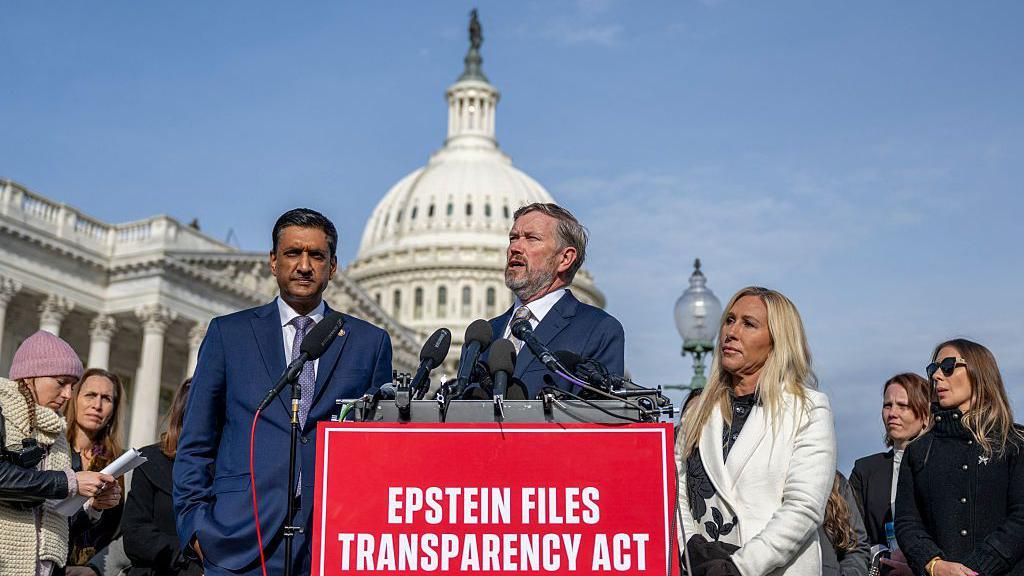
In a rare bipartisan move, both chambers of the U.S. Congress have unanimously agreed to compel the Department of Justice to release its extensive files on Jeffrey Epstein, the disgraced financier and convicted sex offender. The House of Representatives passed the measure with an overwhelming 427-1 vote, while the Senate expedited the process through unanimous consent, bypassing a formal vote. This decision follows President Donald Trump’s unexpected reversal of his stance, urging Congress to disclose the records after facing public pressure from his supporters. Trump’s ties to Epstein resurfaced last week when over 20,000 pages of documents, some referencing the president, were released. The White House has denied any wrongdoing. Republican Clay Higgins of Louisiana was the sole dissenter in the House, expressing concerns about potential harm to innocent individuals. The bill, now headed to Trump’s desk for his expected signature, mandates Attorney General Pam Bondi to release all unclassified materials related to Epstein and his accomplice Ghislaine Maxwell within 30 days. However, Bondi retains the authority to withhold information that could jeopardize ongoing investigations or reveal victims’ identities. Epstein, who died in prison in 2019, was accused of sex trafficking and had previously been convicted of soliciting prostitution from a minor. The push for transparency was spearheaded by Republican Thomas Massie and Democrat Ro Khanna, who introduced the legislation. Massie faced criticism from Trump but remained steadfast, accusing opponents of protecting pedophiles. Marjorie Taylor Greene, another Republican advocate for the release, clashed with Trump, labeling him a ‘traitor’ for his reluctance. Survivors of Epstein’s abuse, including Annie Farmer, have condemned the secrecy, calling it an ‘institutional betrayal’ that allowed further harm. The controversy has sparked significant political fallout, with some viewing it as a threat to Trump’s MAGA movement.