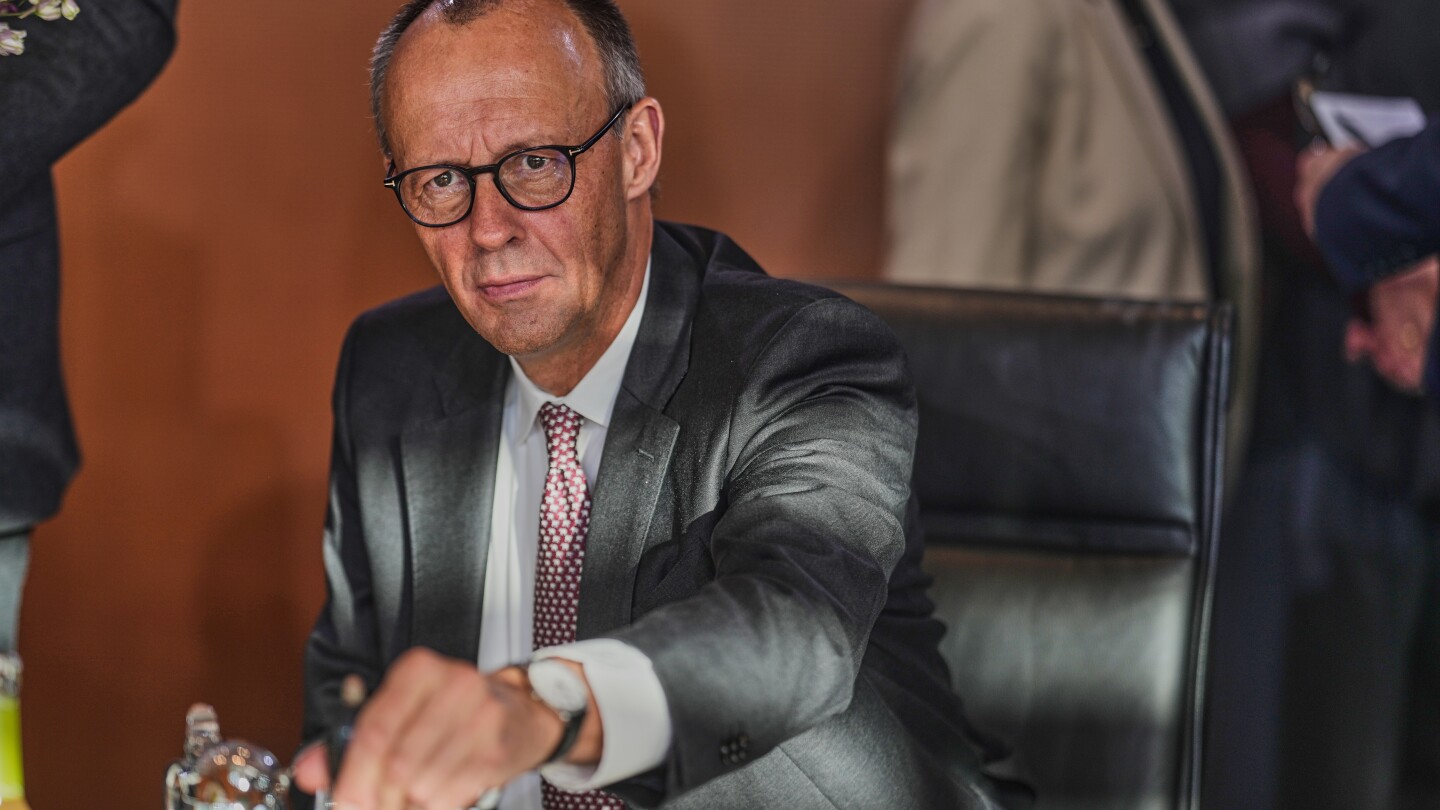
In a decisive move to rejuvenate its sluggish economy, Germany’s governing coalition has agreed to subsidize energy prices for heavy industry over the next three years. Chancellor Friedrich Merz announced on Thursday evening that starting January 1, 2024, companies facing intense international competition will benefit from a reduced electricity price of approximately 5 euro cents (6 U.S. cents) per kilowatt hour, extending through 2028. This initiative aims to alleviate the financial burden on energy-intensive industries and enhance their global competitiveness. Talks with the European Union’s executive commission are nearing completion, with Merz expressing confidence in securing approval for the plan. Germany’s economy, the largest in Europe, has struggled with stagnation for the past two years, with minimal growth recorded. The coalition government, comprising the conservative Merz and the center-left Social Democrats, has prioritized economic revitalization since assuming office in May. Despite these efforts, recent data shows the gross domestic product (GDP) remained stagnant in the third quarter of 2023. Independent economic advisers predict a modest growth of 0.9% in 2024, following a slight 0.2% increase this year. High energy costs, competition from Chinese manufacturers, a shortage of skilled labor, and bureaucratic inefficiencies have further hindered economic progress. To address these challenges, the government has launched a comprehensive investment program, allocating 500 billion euros ($581.4 billion) over the next 12 years to modernize infrastructure, reduce red tape, and accelerate digitization. Economists like Carsten Brzeski of ING have praised the subsidy plan, noting its potential to provide both immediate relief and long-term stability for industries. Holger Lösch, deputy managing director of the Federation of German Industries, emphasized the importance of the subsidized price in maintaining the international competitiveness of energy-intensive companies. Finance Minister Lars Klingbeil estimated the cost of the measure at between 3 and 5 billion euros ($3.4 billion and $5.8 billion). Additionally, the coalition has agreed to reduce a tax on airline tickets starting in July, a long-standing demand of the air transport industry. Both measures will require parliamentary approval.
German government to subsidize industry’s energy prices in bid to revitalize economy