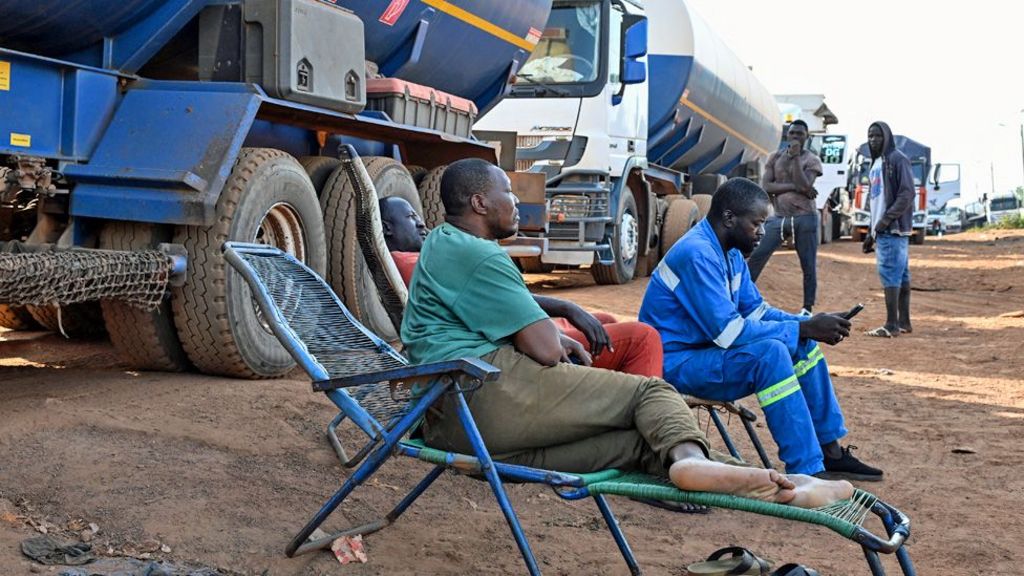
Mali, a landlocked West African nation, is grappling with a severe fuel crisis that has disrupted daily life and exposed the government’s vulnerabilities. The crisis stems from a blockade orchestrated by Jama’at Nusrat al-Islam wal-Muslimin (JNIM), an al-Qaeda-affiliated jihadist group, which has targeted fuel convoys entering Mali. Over the past two months, JNIM fighters have kidnapped drivers, torched more than 100 trucks, and effectively cut off fuel supplies to the capital, Bamako. This economic warfare has paralyzed the country, forcing schools and universities to close, driving up food prices, and leaving hospitals struggling with power cuts. The crisis has also sparked international concern, with the US and France advising their citizens to avoid or leave Mali. The fuel shortage has led to long queues at petrol stations, with some drivers resorting to sleeping at stations in hopes of refueling. Public transport fares have tripled in some areas, forcing many to walk long distances to work. Traders report that food prices have surged due to increased transport costs and dwindling supplies of imported goods. The blockade has highlighted the government’s inability to secure key transport routes and maintain public confidence. In response, the military-led government has implemented emergency measures, including escorting fuel convoys with army trucks and negotiating a fuel supply agreement with Russia. However, critics argue that the junta’s reactive approach has failed to address the root causes of the crisis. The fuel shortage has also deepened Mali’s reliance on Russia, potentially alienating Western aid and investment. For ordinary Malians, the crisis has brought immense hardship, raising fears of increased crime and a worsening security situation. Amidou Diallo, a welder, warns that prolonged shortages could lead to dangerous consequences. As Mali struggles to navigate this crisis, the government faces mounting pressure to restore stability and regain public trust.