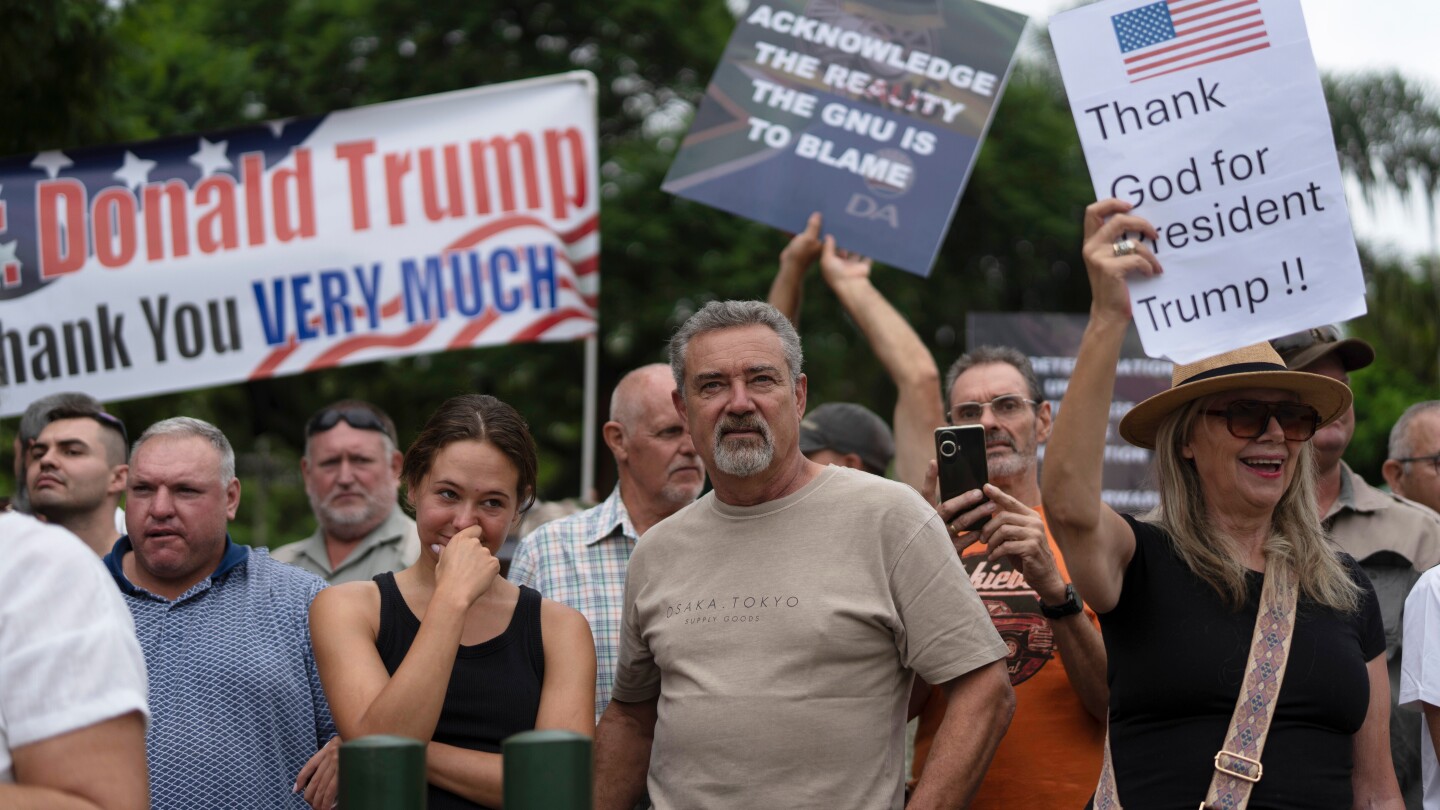
U.S. President Donald Trump has declared that the United States will boycott the upcoming Group of 20 (G20) summit in South Africa, citing alleged human rights abuses against the country’s white minority, the Afrikaners. In a post on Truth Social, Trump announced that no U.S. government officials would attend the November 22-23 summit in Johannesburg, stating, ‘as long as these Human Rights abuses continue.’ This decision marks the latest in a series of criticisms Trump has directed at the Black-led South African government since his return to office. Earlier this year, Trump issued an executive order halting U.S. financial assistance to South Africa, citing the treatment of Afrikaners. The U.S. administration has also prioritized Afrikaners for refugee status, allocating a significant portion of the 7,500 available spots this fiscal year. However, the South African government and some Afrikaners have dismissed Trump’s claims as unfounded. Afrikaners, descendants of Dutch, French, and German settlers, were central to South Africa’s apartheid regime from 1948 to 1994. Today, they are a diverse group, with some acknowledging discrimination while others reject the narrative of persecution. Trump’s allegations include claims that Afrikaners are being ‘killed and slaughtered’ and that their land is being illegally confiscated. These statements reference a controversial land reform law in South Africa, which allows for land appropriation without compensation. Critics argue that the law targets Afrikaners, though it has not yet led to widespread land confiscations. South Africa has refuted Trump’s claims, stating that they lack factual basis and fail to account for the broader context of rural violence, which affects both Black and white farmers. Trump’s broader criticism of South Africa extends beyond the Afrikaner issue, including his disapproval of the country’s stance on Israel and its G20 slogan, which he derided as promoting ‘DEI and climate change.’
How Trump’s support for a white minority group in South Africa led to a US boycott of the G20 summit