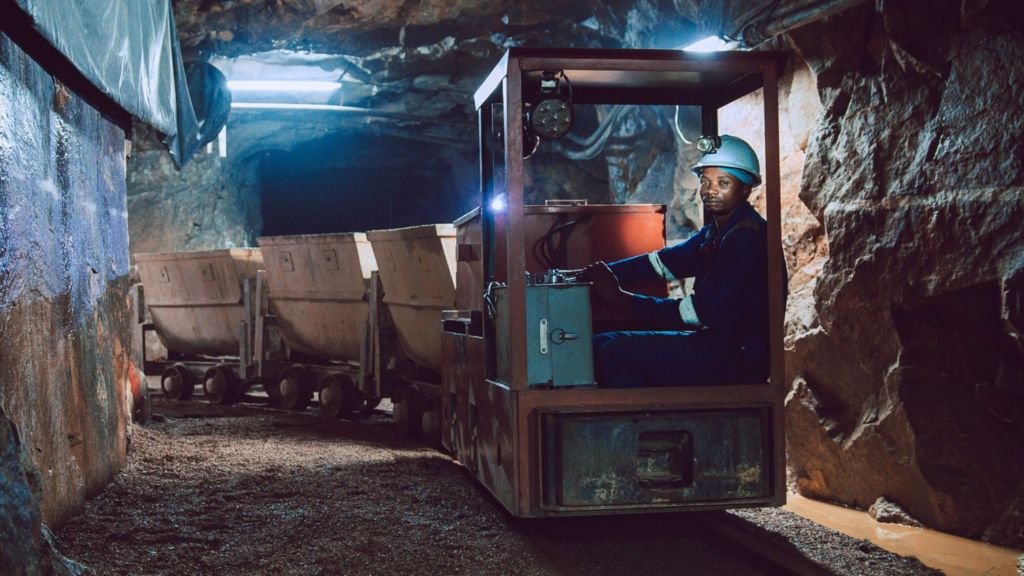
The global competition for critical minerals and metals, essential for powering modern technology, has intensified between the United States and China, with Africa emerging as a strategic battleground. The continent, rich in resources like lithium, cobalt, and rare earths, plays a pivotal role in the supply chains for electric vehicles, AI data centers, and advanced weapon systems. China has long dominated this market, leveraging its domestic reserves and extensive investments in African mining operations. However, the US has recently surpassed China as the largest foreign direct investor in Africa, marking a significant shift in the geopolitical landscape. According to the China Africa Research Initiative at Johns Hopkins University, the US invested $7.8 billion in Africa in 2023, compared to China’s $4 billion. This marks the first time since 2012 that the US has reclaimed the lead. The US International Development Finance Corporation (DFC), established in 2019, has been instrumental in this effort, explicitly aiming to counter China’s influence in strategic regions. One beneficiary of this investment is Rwandan mining company Trinity Metals, which secured a $3.9 million grant from the DFC to develop its tin, tantalum, and tungsten mines. The company now exports tungsten to a processing plant in Pennsylvania, reflecting a growing trend of US-focused supply chains. However, economists like Sepo Haimambo of FNB Namibia caution African nations to assert their interests in negotiations with US entities. She advocates for diversified frameworks, such as joint ventures and local equity participation, to ensure long-term economic benefits. Meanwhile, US companies like ReElement Africa are building refineries in Africa to process minerals locally, aiming to capture more value and foster industrial development. Despite these efforts, some experts argue that US trade tariffs on African nations have dampened enthusiasm for American investments, potentially hindering the US from capitalizing on African discontent with Chinese projects. As the competition heats up, other nations like Brazil, India, and Japan are also increasing their presence in Africa, signaling a broader scramble for the continent’s mineral wealth.