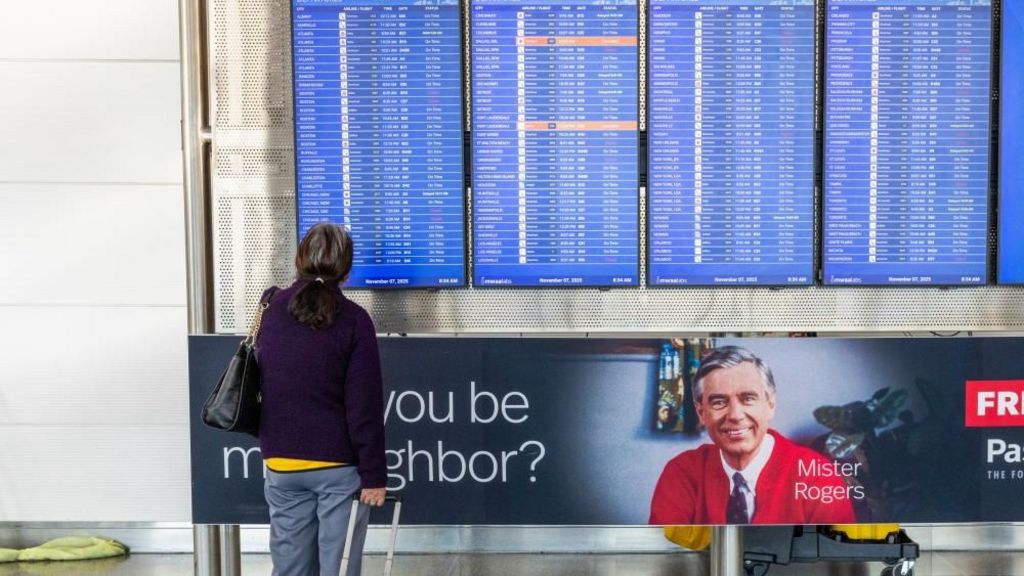
The ongoing US government shutdown has severely disrupted air travel for the third consecutive day, with Transportation Secretary Sean Duffy warning that air traffic could dwindle to a mere trickle if the stalemate persists. According to FlightAware, approximately 1,400 flights to, from, or within the US were canceled, and 2,700 were delayed on Sunday morning. Newark, New Jersey, experienced the longest delays, averaging over two hours.
In a glimmer of hope, US media reports indicate that lawmakers are negotiating a potential compromise to resolve the funding crisis and end the shutdown. The Senate convened for a rare weekend session on Sunday to address the issue. Duffy emphasized the escalating severity of the situation, cautioning that Thanksgiving travel plans could be jeopardized if a resolution is not reached soon.
The Federal Aviation Administration (FAA) announced last week that it would reduce air travel capacity by up to 6% this weekend and 10% by next weekend at 40 of the nation’s busiest airports. While international flights remain unaffected, some airlines may opt to cancel them. The reduction in air traffic allowances stems from air traffic controllers, who are unpaid during the shutdown, reportedly experiencing fatigue and absenteeism.
Defense Secretary Pete Hegseth offered to deploy military air traffic controllers to assist, but Duffy declined, citing their lack of certification for civilian airports. The shutdown, now in its 40th day, has left hundreds of thousands of federal workers unpaid since October 1. Low-income Americans relying on food assistance have also been impacted, with the administration agreeing to cover only half of monthly benefits.
Republicans and Democrats continue to blame each other for the impasse. Democrats insist on including health insurance subsidies in any spending plan, while Republicans seek funding without additional conditions. President Donald Trump recently proposed sending money directly to Americans for health insurance purchases rather than to insurance companies. Republican senators are reportedly crafting a compromise package, with a potential vote on legislation expected on Sunday.