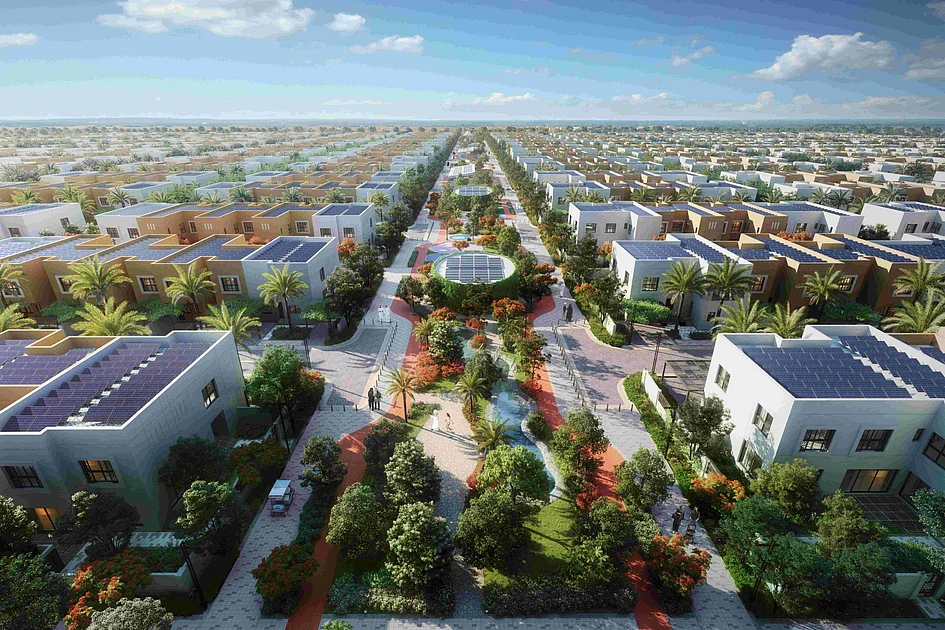
As the world grapples with mounting pressures on water resources, escalating energy demands, and the increasing need for local food production due to global supply chain vulnerabilities, the UAE has positioned itself at the forefront of addressing these challenges. The concept of the food-water-energy nexus has emerged as a critical framework for building resilient and sustainable communities, particularly in the face of rapid urbanization and resource constraints. This approach, endorsed by the United Nations, underscores the interconnectedness of water, energy, and food security, which are central to achieving 14 out of the 17 Sustainable Development Goals. In the UAE, this interconnectedness is not merely theoretical but is actively integrated into strategic initiatives such as the UAE Food Security Strategy 2051, which aims to enhance domestic food production while mitigating the impacts of climate change-induced water scarcity. Sharjah, in particular, has become a hub for sustainable innovation, with projects like Sharjah Sustainable City exemplifying this commitment. Spanning 7.2 million square feet, this master-planned community features 1,250 villas powered by rooftop solar panels, treats 100% of its wastewater for irrigation, and incorporates urban farming and biodomes to promote local food production. The project also emphasizes behavioral change, engaging residents through workshops on urban farming, composting, energy conservation, and sustainable art. Sharjah’s broader sustainability vision, including initiatives like electrifying its public bus fleet with low-emission vehicles, further cements its leadership in regenerative urbanism. Moving forward, the challenge for real estate developers and policymakers lies in embedding the food-water-energy nexus into the core of new developments, ensuring that sustainable living becomes the default rather than the exception. As global milestones for food, energy, and sustainability are observed, the integration of these systems will be pivotal in shaping communities that are not only resilient but also economically, socially, and environmentally sustainable.