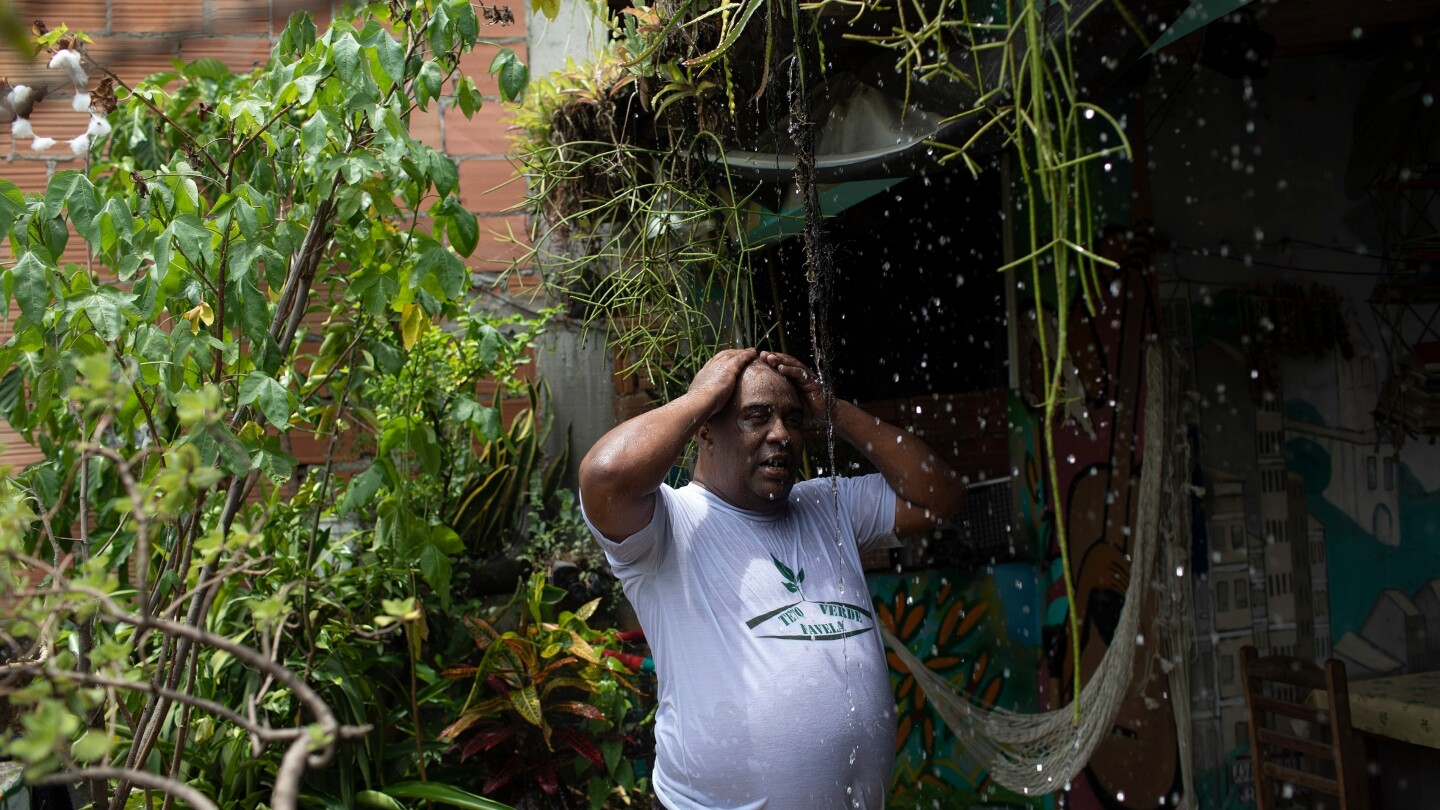
In the Arara neighborhood of northern Rio de Janeiro, summer heatwaves are becoming increasingly severe, leaving residents like Luis Cassiano, a 30-year resident, deeply concerned. Despite having air conditioning, Cassiano often cannot rely on it due to frequent power outages caused by an overloaded system. His green roof, installed a decade ago, provides some relief, keeping his home up to 15 degrees Celsius cooler than his neighbors’. However, the relentless heat remains a significant challenge. ‘The sun in the summer nowadays is scary,’ Cassiano remarked. As world leaders gather in Brazil for climate talks, the plight of communities like Arara underscores the urgent need for action. Poorer areas are more vulnerable to extreme weather and less equipped to cope with its impacts. Effective climate solutions require not only pledges to reduce emissions but also the political will and financial resources to implement them. The United Nations estimates that 1.1 billion people worldwide live in acute poverty, making climate adaptation a critical issue. The choice of Belem, a relatively poor city, to host these talks has been praised for highlighting the intersection of climate change and poverty. Inger Andersen, executive director of the U.N. Environment Programme, noted that Belem represents the reality for the majority of the global population affected by climate change. Even in wealthy countries, the poor face significant climate risks. A U.N. Development Programme report found that 82% of people living in poverty in highly developed countries are exposed to climate hazards such as extreme heat, drought, floods, and air pollution. Carter Brandon, a senior fellow at the World Resources Institute, emphasized that poverty exacerbates vulnerability to climate change, as those affected often lack the resources to relocate or rebuild after disasters. Agriculture is particularly at risk, with crop yields expected to decline significantly in poorer countries. Heriberto Tapia of the UNDP highlighted Africa as a major concern, with over 500 million people in poverty relying on agriculture for their livelihoods. Ismahane Elouafi of CGIAR noted that while technology could help, many farmers cannot afford it. Despite the urgency, some experts are skeptical that COP30 will deliver the necessary funding. Brazilian officials hope that hosting the talks in Belem will remind negotiators of the daily struggles faced by millions due to climate change. However, Kimberly Marion Suiseeya of Duke University expressed doubts about the likelihood of rapid action emerging from the conference. Pedro Conceição of the UNDP stressed that poverty reduction and climate action are interconnected, rejecting the notion that they are separate issues. Bill Gates has called for a shift in focus from emissions reduction to alleviating human suffering, particularly in poor countries. Conceição argued that climate change is not a distant problem but a present reality that must be addressed alongside poverty.