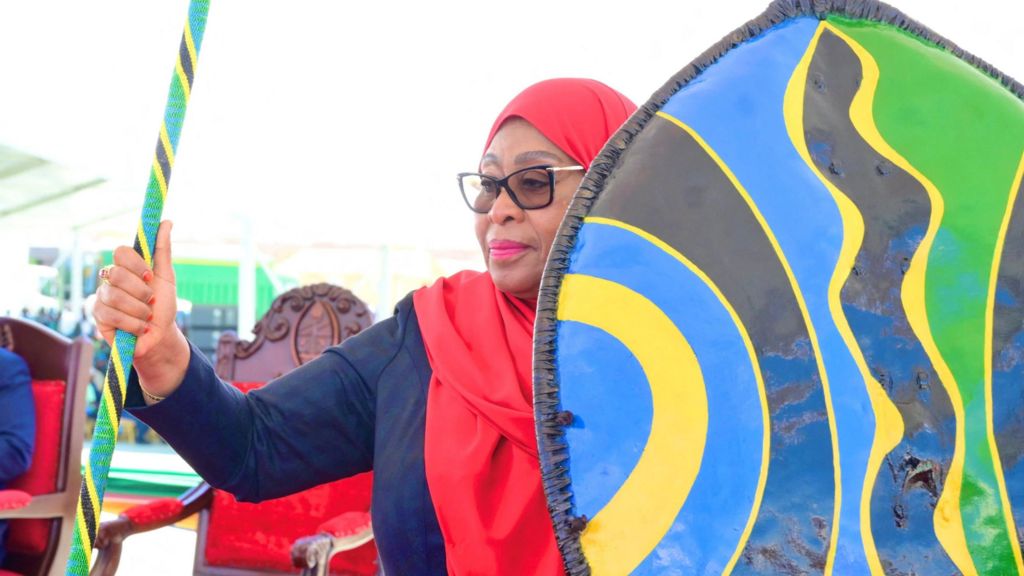
Tanzania’s political landscape remains tense as President Samia Suluhu Hassan was sworn in on Monday following a contentious election marred by violence and allegations of electoral malpractice. The election, which saw Hassan declared the winner with an overwhelming 98% of the vote, has been criticized by regional observers for failing to meet democratic standards. The Southern African Development Community (Sadc) highlighted significant shortcomings in the electoral process. The unrest led to a nationwide internet shutdown, closure of schools and businesses, and a curfew in Dar es Salaam, which was lifted on Monday as life began to return to normal. However, the aftermath of the protests continues to haunt the nation, with families searching for missing loved ones and mourning those killed in clashes between security forces and opposition supporters. Opposition leaders Tundu Lissu and Luhaga Mpina were barred from contesting the election, further fueling allegations of a rigged process. Reports from human rights organizations and diplomatic sources suggest that hundreds of people may have died in the violence, though the government has not released official casualty figures. Amnesty International and Human Rights Watch have condemned the use of excessive force by authorities, urging accountability for those responsible. President Hassan, who assumed office in 2021 as Tanzania’s first female president, acknowledged the loss of lives and property damage during her inauguration but attributed some of the unrest to foreign nationals. Despite initial hopes for political reform under her leadership, the narrowing of political freedoms has raised concerns about the country’s democratic trajectory.