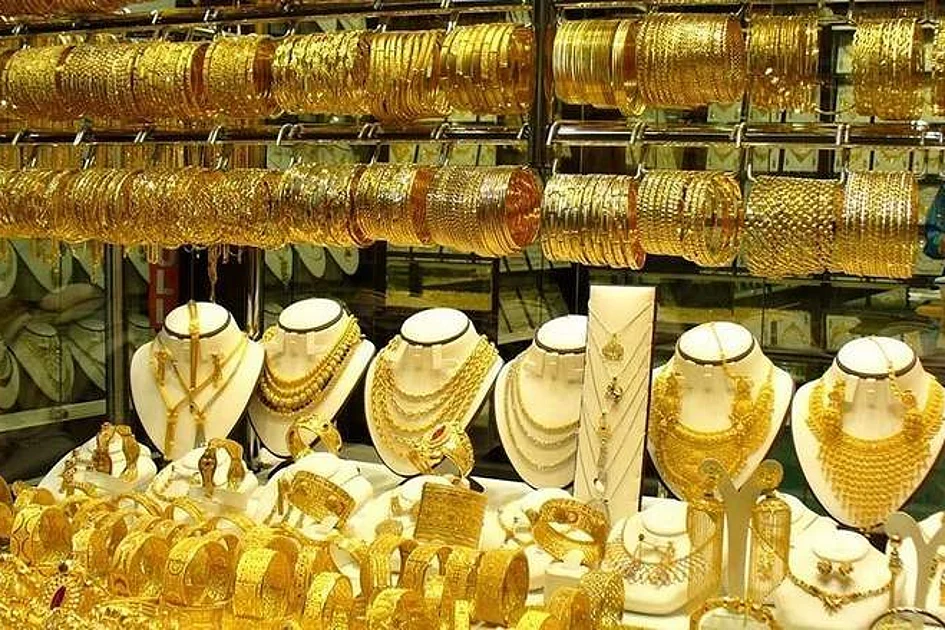
Gold prices in the UAE showed modest gains on Friday, reflecting resilience in local demand and support from global factors. According to the Dubai Gold and Jewellery Group, 24-carat gold closed at Dh482.75 per gram, up from Dh479 the previous day. Other variants, including 22-carat, 21-carat, and 18-carat gold, also saw slight increases. These gains occurred during a week when global bullion prices were retracting from record highs, sparking debates among investors and market analysts.
Internationally, gold prices surged to a historic high of around $4,300 per ounce earlier this month before slipping to approximately $4,050, marking a 5.8% decline. Market strategists view this dip as a healthy correction following extreme overbought conditions. Technical indicators, such as the Relative Strength Index (RSI), had signaled the need for consolidation, with the RSI reaching an unprecedented 92 during the rally.
Alex Kuptsikevich, chief market analyst at FxPro, noted that the correction is not yet over. He attributed gold’s record high to a rare alignment of macroeconomic anxieties, including devaluation trading, expectations of aggressive monetary expansion by the Fed, geopolitical tensions, and central bank purchases. However, these factors are now easing, with the US and China finding common ground, the Middle East conflict cooling, and the Fed remaining cautious on rate cuts.
Despite the recent pullback, gold’s long-term bullish case remains supported by structural factors such as central bank reserve diversification, high government debt levels, and growing investor interest in gold as a hedge against currency debasement. Analysts emphasize that the current correction is a pause rather than a trend reversal, with additional short-term downside possible. Seasonal patterns, particularly October’s volatility, also play a role, as institutional portfolio adjustments often lead to selling pressure.
In Dubai, the emirate’s status as a global bullion trading hub and key retail jewellery market means price swings quickly influence buying behavior. Traders reported steady footfall this week, with shoppers viewing the dip in global prices as a favorable entry point. Retailers anticipate increased demand ahead of the festive and wedding season, especially if prices stabilize around current levels. Gulf jewellery buyers, traditionally price-sensitive but value-driven, often see dips as opportunities rather than warnings.
Gold mining stocks have felt the impact more acutely, with prices declining by 15-20%, compared to bullion’s less than 6% drop. Large-cap producers with stronger balance sheets have fared better, while mid-cap and exploration companies have seen steeper losses as investors reduce speculative exposure. This pattern is characteristic of retracement phases in commodity bull markets.
In summary, gold’s recent price movements represent a healthy correction rather than a collapse. While near-term volatility is expected, the long-term outlook remains positive, supported by fundamental factors and investor confidence in gold’s role as a hedge against economic uncertainty.