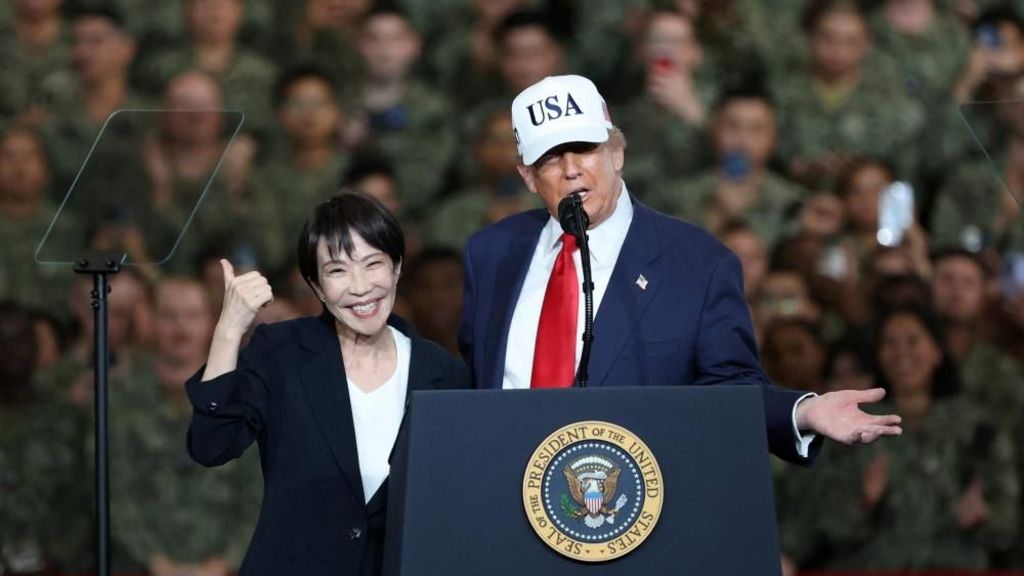
Donald Trump’s five-day diplomatic tour across East Asia showcased both his influence and the constraints of his power. The trip, which included stops in Malaysia, Japan, and South Korea, was marked by a mix of trade negotiations, personal accommodations, and symbolic gestures. In Malaysia, Trump secured access to critical minerals and facilitated progress on trade agreements with Southeast Asian nations. Japan’s newly elected Prime Minister Sanai Takaichi announced $550 billion in Japanese investments in the U.S. and presented Trump with gifts, including cherry trees and a golf club once owned by the late Shinzo Abe. South Korea welcomed Trump with a 21-gun salute and awarded him the nation’s highest medal, alongside a replica of an ancient Korean crown. However, the climax of the trip came during Trump’s meeting with Chinese President Xi Jinping in Busan. Unlike the pomp and pageantry of previous stops, this encounter was stark and businesslike, reflecting the high stakes of U.S.-China relations. The two leaders discussed tariffs, market access, and critical minerals, ultimately agreeing to de-escalate tensions. While Trump hailed the meeting as ‘amazing,’ it underscored the complexities of balancing power and diplomacy in a rapidly shifting global order. As Trump departed, Xi’s arrival in South Korea symbolized China’s growing influence, leaving questions about America’s future role in the region.
Trump’s Asia tour sees deals, knee-bending and a revealing final meeting