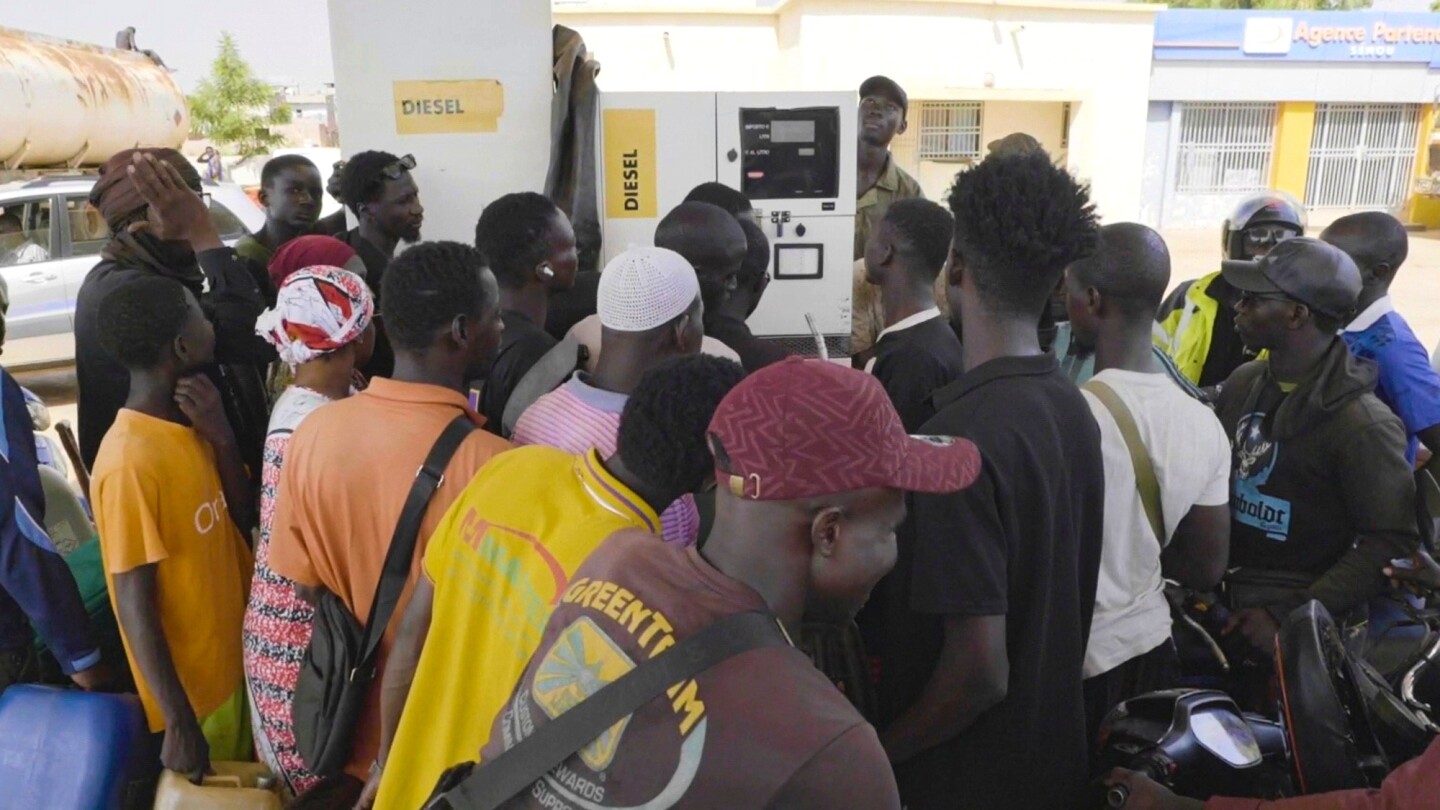
The West African nation of Mali is grappling with a severe crisis as jihadi militants enforce a blockade on fuel imports, crippling the country’s economy and daily life. Education Minister Amadou Sy Savane announced on Sunday that schools nationwide will remain closed for two weeks due to fuel shortages, which have made it nearly impossible for staff and workers to commute. Mali, a landlocked country of 25 million people, heavily relies on fuel imports from neighboring Senegal and Ivory Coast, making the blockade a significant blow to its already fragile economy. The blockade was imposed by the al-Qaida-linked Jama’at Nusrat al-Islam wal-Muslimin (JNIM) group in early September, following government efforts to cut fuel supplies to remote areas as a strategy to weaken the militants. This move has left hundreds of fuel trucks stranded at the border, exacerbating the crisis. JNIM, the most potent armed group in the Sahel region, has targeted transport companies along major roads, forcing many to halt operations. Analysts suggest the blockade is a strategic effort to undermine Mali’s military junta, which came to power in a 2020 coup, by pressuring commercial operators and residents to distance themselves from the government. Despite military attempts to escort fuel trucks and conduct airstrikes against JNIM, the lack of air power has limited their effectiveness. The blockade has led to skyrocketing commodity prices, worsening living conditions for millions, with long queues forming at gas stations in the capital, Bamako. Mali, one of Africa’s top gold producers, remains one of the world’s least developed nations, with nearly half its population living in poverty. The crisis highlights the deepening security challenges in the Sahel region, where JNIM is actively destabilizing governments in Mali, Burkina Faso, and Niger.