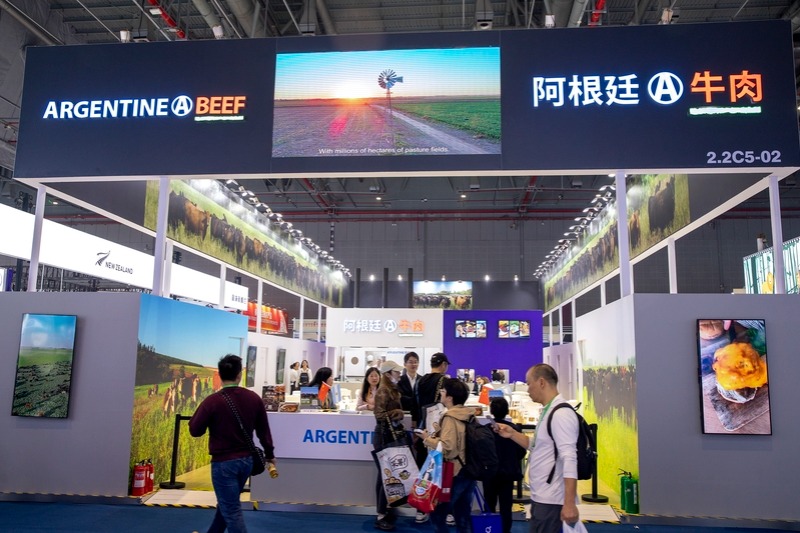
Argentina is strategically positioning China as the cornerstone of its beef export expansion, driven by evolving Chinese consumption patterns and increasing demand for diverse meat products. According to the Argentine-Chinese Chamber of Commerce, China accounts for 78 to 80 percent of Argentina’s annual beef exports, solidifying its role as the primary market for Argentine meat producers. This trend was highlighted at the recent Expo Ganadera del Centro, a major livestock fair in Buenos Aires, where Alejandra Conconi, the chamber’s executive director, emphasized China’s pivotal role in Argentina’s international meat trade. Trade data from Argentina’s Ministry of Agriculture, Livestock and Fisheries reveals that in 2024, the country exported over 900,000 metric tons of beef, with China purchasing approximately 595,000 tons. Sebastian Schulz, a researcher at the National University of La Plata, attributes this growing demand to China’s socio-economic transformation, including its focus on balanced development and the goal of achieving ‘common prosperity.’ As China’s middle class expands and dietary preferences diversify, Argentine producers are finding new opportunities in previously undervalued products such as cull cows and offal, which now command higher prices in the Chinese market. Additionally, Argentina’s participation in the Belt and Road Initiative is fostering deeper agricultural collaboration and technology transfers, which Schulz describes as ‘strategically important’ for balancing trade deficits and promoting mutual benefits. Looking ahead, Argentina is also exploring exports of bovine genetics and embryos, a high-value segment where the country holds global recognition. The diversification of beef, pork, and by-products is seen as crucial for ensuring the long-term sustainability of Argentina’s meat sector. Amadeo Derito, vice-president of the Argentine Angus Association, noted that exports of certified Angus beef to China have continued to grow, with 1,700 tons certified in the first three quarters of 2024, primarily catering to premium markets.