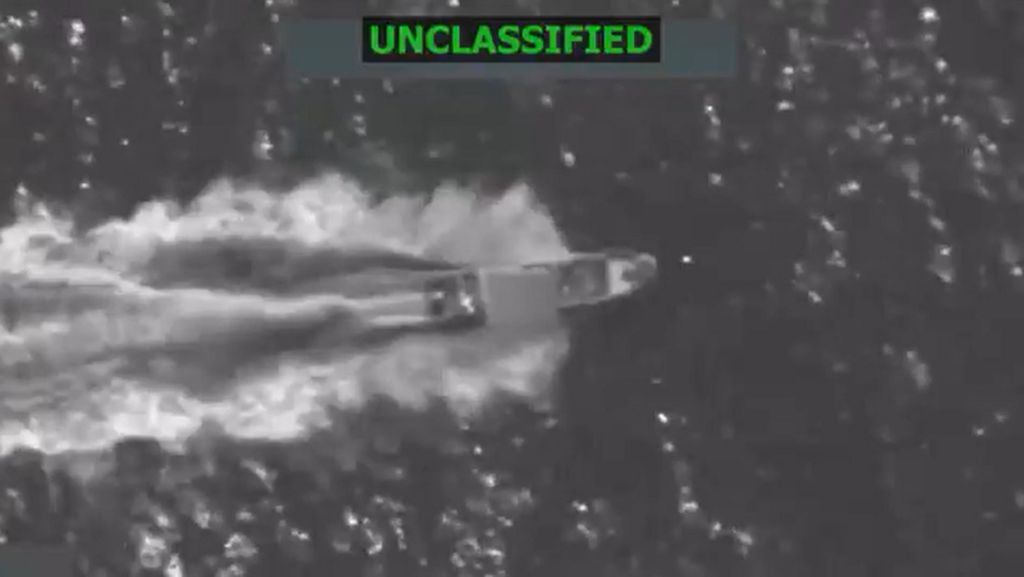
In a significant escalation of its anti-drug operations, US forces have conducted a second strike in the Pacific Ocean targeting a vessel allegedly involved in drug smuggling. The strike, carried out on Wednesday, resulted in the deaths of three individuals, with no US casualties reported. This follows another strike in the Pacific a day earlier, which killed two people. Both vessels were suspected of transporting drugs along international trafficking routes, according to US Defense Secretary Pete Hegseth. These strikes mark the eighth and ninth such operations since September 2, with most previous actions concentrated in the Caribbean Sea. Hegseth emphasized the US commitment to combating narco-terrorism, stating, ‘These strikes will continue, day after day. These are not simply drug runners—these are narco-terrorists bringing death and destruction to our cities.’ A video accompanying Hegseth’s social media post appears to show a boat engulfed in flames after being struck by a US bomb, followed by a second airstrike targeting debris in the water. President Donald Trump asserted his legal authority to continue such operations in international waters, though he hinted at seeking congressional approval if the campaign expands to land targets. ‘We’re allowed to do that, and if we do (it) by land, we may go back to Congress,’ Trump stated. The administration is reportedly prepared for a broader anti-drug effort on land, which would mark a significant escalation. The strikes have already claimed at least 37 lives, including a recent attack on a semi-submersible vessel in the Caribbean. Two survivors from a strike last week were repatriated to Colombia and Ecuador, with Ecuador releasing one man due to lack of evidence. Meanwhile, tensions between the Trump administration and Colombian President Gustavo Petro have intensified, with Trump accusing Petro of being an ‘illegal drug leader’ and threatening to cut US subsidies to Colombia. Experts note that Colombia and Ecuador’s Pacific coastlines are key routes for drug trafficking to the US. While most US strikes have occurred in the Caribbean, DEA estimates suggest the Pacific is the primary conduit for cocaine bound for the US. The operation has deployed 10,000 US troops, along with numerous military assets, to the Caribbean, though details on the identities of those killed remain scarce.