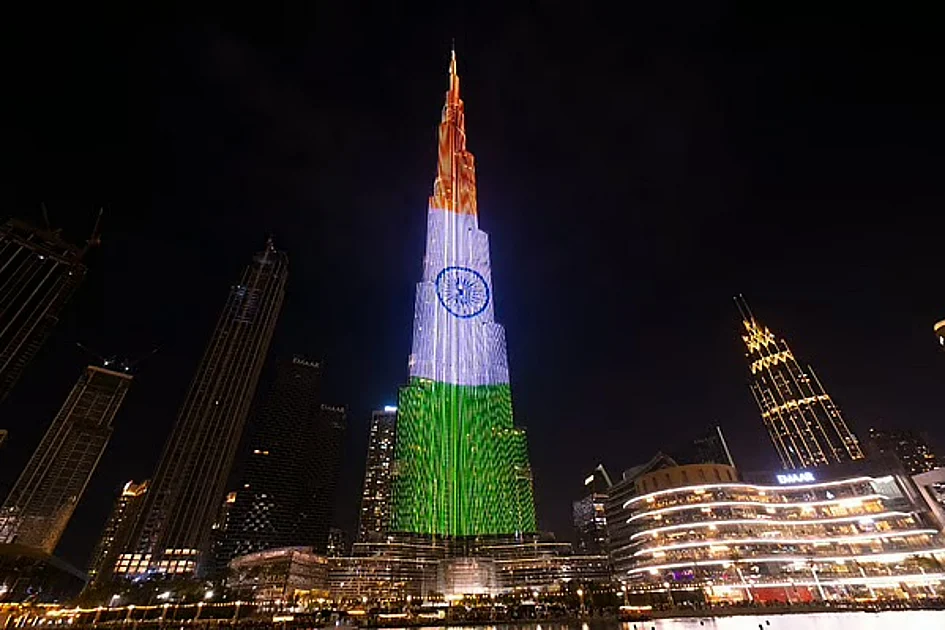
In a world often divided by identity, India emerges as a beacon of unity, demonstrating that diversity, when embraced with confidence, can be a source of strength rather than conflict. With a population exceeding 1.4 billion, India is a mosaic of over 19,000 dialects, multiple religions, and thousands of festivals, all unified under a single Constitution that guarantees liberty, equality, and fraternity. This is not merely a political slogan but a lived reality, evident in the daily interactions across its streets, classrooms, and places of worship. India’s secular ethos, deeply embedded in its civilizational DNA, predates modern concepts of multiculturalism. From the teachings of Buddha at Sarnath to Emperor Ashoka’s edicts, and from Akbar’s Din-i-Ilahi to Mahatma Gandhi’s pluralism, India’s inclusive spirit has thrived through the ages. Today, as societies worldwide grapple with polarization, India’s example, alongside that of the United Arab Emirates, illustrates how faith, identity, and modern statehood can coexist harmoniously. India’s secularism is not the rejection of religion but the equal respect for all faiths, encapsulated in the principle of Sarva Dharma Sambhava. This approach has ensured that India remains a sanctuary for every religion, from Hinduism and Islam to Christianity, Sikhism, Buddhism, Jainism, Judaism, and Zoroastrianism. The country’s history of sheltering persecuted communities, such as Jews fleeing Roman oppression and Zoroastrians escaping Iran, underscores its enduring commitment to inclusivity. In contemporary India, this tradition persists through initiatives like the Prime Minister’s visits to interfaith sites and joint celebrations of festivals across religions. India’s inclusivity is most visible in everyday life, from Muslim artisans crafting Hindu idols in Kerala to gurdwaras serving langars to people of all faiths in Punjab. Even in the digital age, Indian pluralism adapts creatively, with social media campaigns promoting unity and civic pride. Recent institutional initiatives, such as the Kashi-Tamil Sangamam and the Bharat Mandapam for the G20, further reinforce India’s commitment to diversity. The peaceful coexistence of the new Ram Temple in Ayodhya and adjacent Muslim cultural centers exemplifies India’s ongoing pursuit of harmony. India’s multicultural harmony resonates with the United Arab Emirates, another modern state that has successfully integrated faith, progress, and inclusivity. Both nations, rooted in ancient civilizations, demonstrate that progress need not erase identity. The UAE’s Abrahamic Family House in Abu Dhabi, housing a mosque, church, and synagogue, mirrors India’s inclusive vision. The strong cultural and diplomatic ties between India and the UAE, driven by shared values, highlight the potential of pluralism in fostering global harmony. As nations worldwide confront social divisions, India’s inclusive experiment offers a template for coexistence, proving that true strength lies in the symphony of differences harmonized by respect.