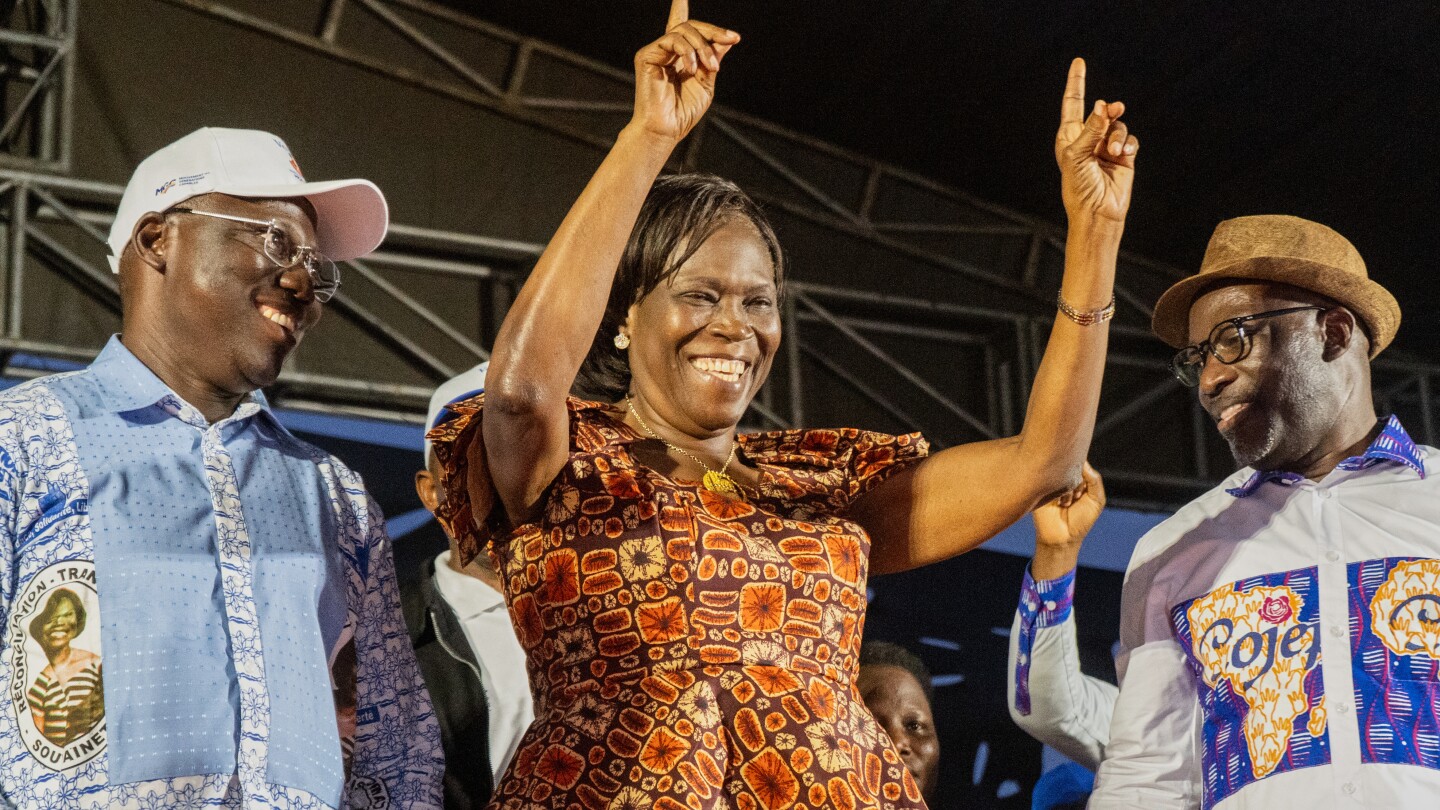
Simone Ehivet Gbagbo, the former first lady of Ivory Coast, is making a bold bid for the presidency in the upcoming election, marking a potential historic moment for the West African nation. At 76, Gbagbo is running under the Movement of Skilled Generations party, challenging incumbent President Alassane Ouattara, who is seeking a fourth term. If successful, she would become the country’s first female president, a milestone she believes Ivorians are now ready to embrace. ‘The idea of a female president is much less shocking than it was 20 years ago,’ Gbagbo told The Associated Press during a campaign stop in Guibéroua. ‘It’s good for a woman to run, and if it’s me, then so much the better.’ Gbagbo’s political journey has been marked by both power and controversy. As first lady during her ex-husband Laurent Gbagbo’s presidency, she earned the nickname ‘iron lady’ for her influential role and tough stance against opposition and rebel forces. Her tenure coincided with a civil war and a violent electoral crisis in 2010-2011, which left thousands dead and brought the country to the brink of collapse. Following her husband’s refusal to concede defeat in the 2010 election, the couple was arrested in 2011 after a siege on their bunker in Abidjan. Laurent Gbagbo faced charges at the International Criminal Court (ICC) but was acquitted, while Simone was sentenced to 20 years in prison by Ivorian authorities for ‘undermining state security.’ She was granted amnesty in 2018 and has since reemerged as a political figure. Despite her controversial past, Gbagbo is campaigning on promises of social welfare programs to address poverty and inequality, as well as national reconciliation to heal the scars of the civil war. However, her candidacy faces significant challenges, including a fragmented opposition and allegations of a clampdown on rival candidates. Gbagbo remains undeterred, urging Ivorians to ‘turn out en masse to vote and defeat the candidate they don’t want.’
Simone Gbagbo, Ivory Coast’s iron lady, eyes presidential palace in unlikely comeback bid