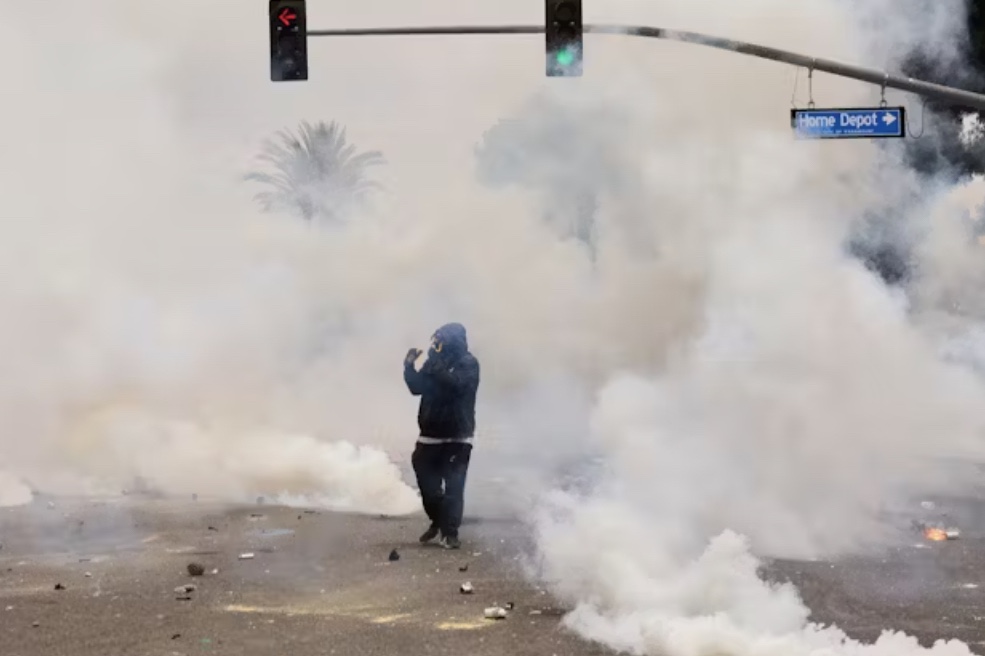
In response to escalating protests in Los Angeles against federal immigration enforcement raids, President Donald Trump ordered the deployment of 2,000 California National Guard troops on June 7, 2025. The move aimed to protect federal agents conducting the raids, with Trump also authorizing the Pentagon to dispatch regular U.S. troops if necessary. The president’s orders did not specify rules of engagement, raising concerns about the potential use of force. California Governor Gavin Newsom, who did not request the National Guard, criticized the decision as “inflammatory” and warned it could exacerbate tensions. The protests began on June 6, 2025, following immigration raids across the city. The deployment of the National Guard, a state militia typically under the command of governors, was federalized by Trump under Section 12406 of Title 10 of the U.S. Code, which allows mobilization in cases of rebellion or threats to federal authority. This decision has drawn comparisons to the Kent State tragedy of May 4, 1970, when National Guard troops opened fire on anti-war protesters at Kent State University, killing four students and wounding nine. Historians and experts warn that deploying military forces in civilian protests can lead to unpredictable and tragic outcomes, as seen in Kent State. The incident underscores the delicate balance between maintaining order and respecting civil liberties, with critics arguing that aggressive displays of force can escalate tensions rather than resolve them.