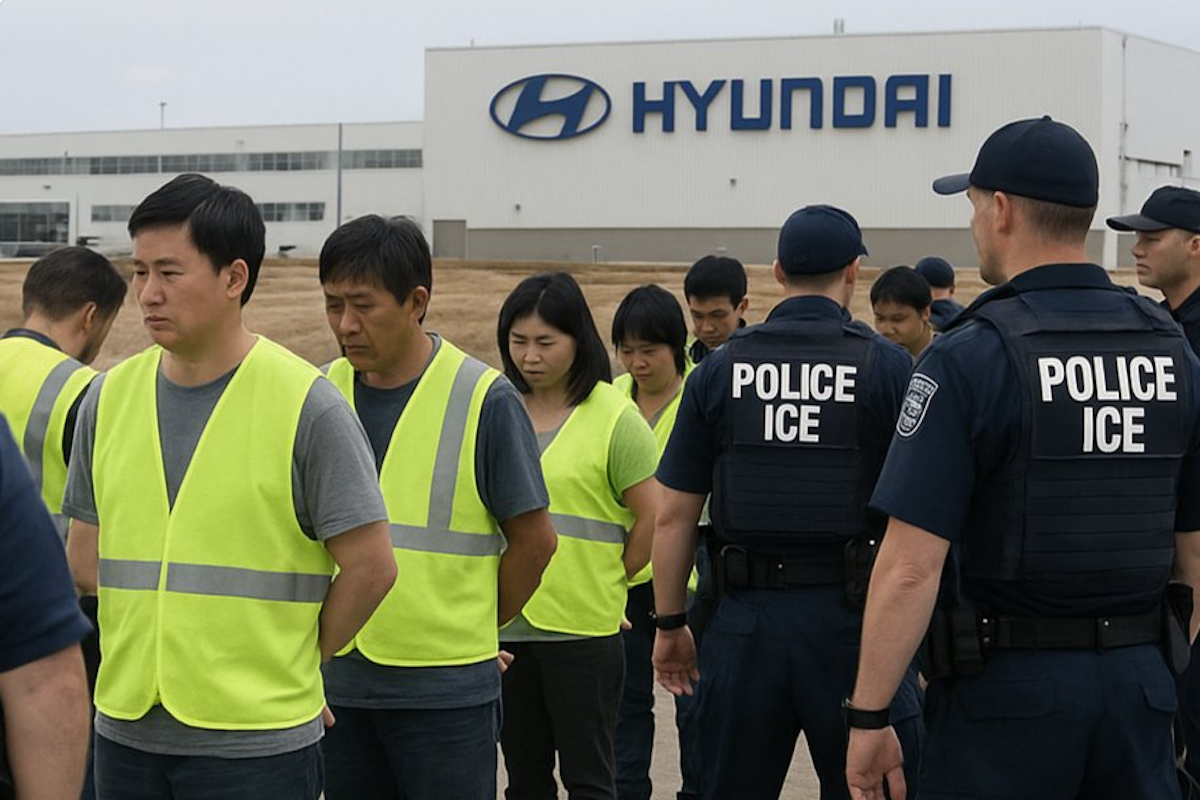
In a dramatic operation on September 4, U.S. Immigration and Customs Enforcement (ICE) agents, alongside Homeland Security Investigations (HSI), arrested 475 employees at the Hyundai Motor-LG Energy Solution joint venture’s electric vehicle (EV) battery manufacturing plant near Savannah, Georgia. The raid, described as the largest single-site enforcement operation to date, involved a heavily armed contingent, armored vehicles, and helicopters, with detained workers seen in ankle chains and handcuffs being transported on buses. Over 300 of those arrested were South Korean nationals, prompting immediate concern from the South Korean government. President Lee Jae-myung urged swift action to support affected citizens, while Foreign Affairs Minister Cho Hyun hinted at potential diplomatic discussions in Washington. The incident has raised questions about the treatment of foreign workers and the broader implications for international business relations. Steven Schrank, HSI’s chief special agent in Atlanta, emphasized the operation’s focus on protecting American jobs and ensuring legal compliance. However, South Korean media and officials have speculated about potential ulterior motives, linking the raid to political dynamics and the Biden administration’s prior endorsement of the facility. The raid has disrupted operations at the plant, which was slated to begin production in 2026, and could delay the production of Hyundai, Kia, and Genesis EVs. The incident has also drawn criticism for the perceived humiliation of South Korean workers, with global media coverage amplifying the fallout. Hyundai Motor has pledged to review its compliance processes, but the event underscores the challenges foreign companies face in navigating U.S. immigration and labor laws.