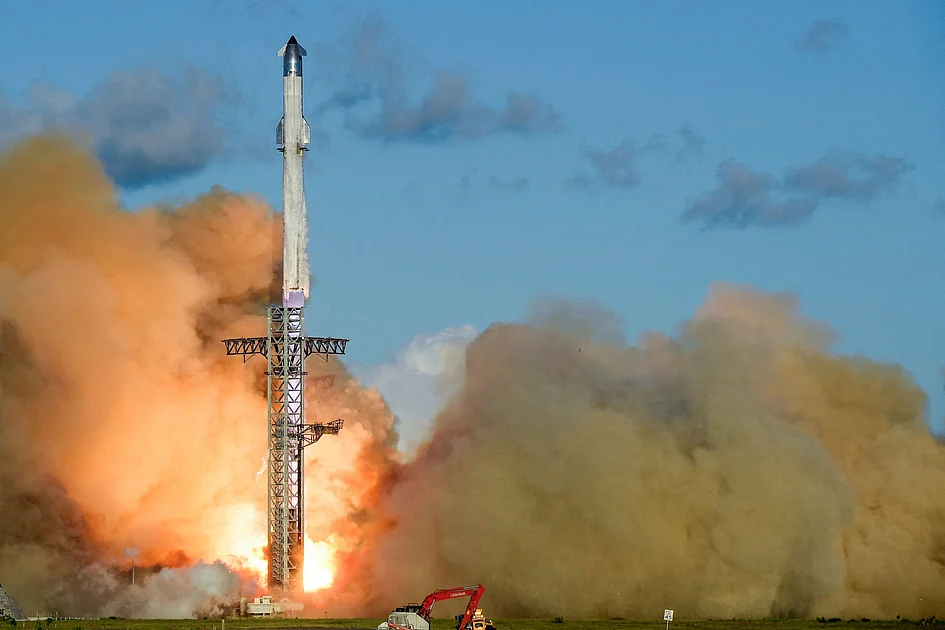
SpaceX has marked a significant milestone with the successful test flight of its Starship megarocket, a critical component in NASA’s Artemis program aimed at returning astronauts to the Moon. The launch, conducted on Monday evening from SpaceX’s south Texas facilities, saw the massive rocket ascend into the golden-hour skies before its booster, Super Heavy, landed as planned in the Gulf of Mexico. The upper stage, Starship, continued its journey through space, completing a series of tests before splashing down in the Indian Ocean over an hour after liftoff. This mission, the 11th test flight for Starship, follows a series of earlier setbacks, including explosive failures, which had cast doubt on the project’s timeline and feasibility. However, the recent success signals a turning point for SpaceX, which is under pressure to deliver on its multibillion-dollar contract with NASA to develop a lunar lander. Elon Musk, SpaceX’s founder, emphasized the visceral experience of witnessing the launch firsthand, describing it as a pivotal moment in the company’s ambitious vision to eventually transport humans to Mars. The next iteration of Starship, Version 3, is already in development, with Monday’s flight expected to be the last for the current prototype. Despite the progress, challenges remain, including the development of a fully reusable orbital heat shield and the untested process of refueling in orbit. These hurdles are critical for deep-space missions and have been flagged by NASA’s Aerospace Safety Advisory Panel as potential threats to the timeline. As the U.S. races against China’s lunar ambitions, the success of Starship is seen as a key factor in maintaining America’s leadership in space exploration.