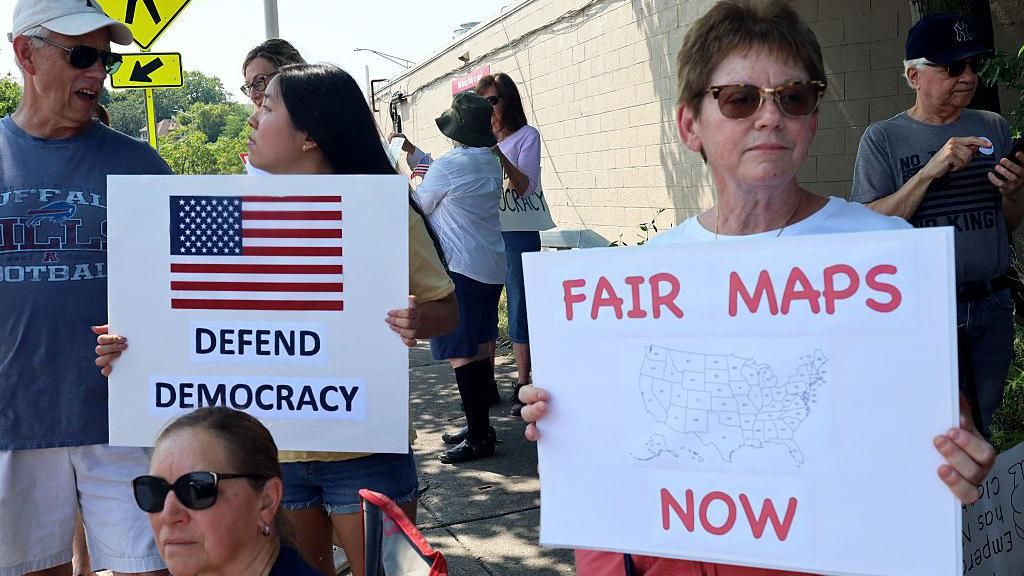
The United States is witnessing a fierce nationwide battle over redistricting, as Republicans and Democrats scramble to redraw congressional maps in a bid to alter the balance of power in Washington. This political tug-of-war, which has already engulfed states like Texas, California, and Missouri, has now reached North Carolina, where Republican leaders are heeding former President Donald Trump’s call to counter Democratic redistricting efforts. The stakes are high, with both parties seeking every possible advantage ahead of the 2026 midterm elections. The fight began in Texas this summer, where the Republican-majority legislature redrew congressional seats to potentially add five more Republican-leaning districts. California, a Democratic stronghold, responded by crafting its own maps to boost Democratic representation by five seats, aiming to neutralize Texas’ gains. This trend has since spread across the country, with states like Missouri, Ohio, and now North Carolina joining the fray. The U.S. House of Representatives, currently resting on a knife’s edge with a slim Republican majority, could see a dramatic shift if Democrats manage to flip just three more seats. Historically, the president’s party tends to lose seats in midterm elections, and a Democratic-controlled House could lead to sweeping investigations into presidential actions, reminiscent of the Trump and Biden administrations. Redistricting, a process typically conducted every decade following the U.S. Census, has become a mid-decade battleground, with both parties aiming to reshape districts to their advantage. However, this practice, known as gerrymandering, has drawn criticism for allowing politicians to choose their voters rather than the other way around. Legal challenges have emerged, particularly in Texas, where Democrats and civil rights groups argue that the new maps dilute minority voting power, violating the federal Voting Rights Act. The Supreme Court’s 2019 ruling, which removed the judiciary’s power to block political gerrymandering, has further complicated the landscape. As the 2026 midterms approach, redistricting remains an urgent issue for state lawmakers, with Democratic-led states like Illinois, New York, and New Jersey discussing countermeasures to Republican strategies. Meanwhile, Republican-controlled states like Indiana and Florida are also exploring redistricting to bolster their representation in Washington. The outcome of this nationwide redistricting battle could have profound implications for the future of U.S. politics, shaping the ideological tilt of Congress and influencing the legislative agenda for years to come.