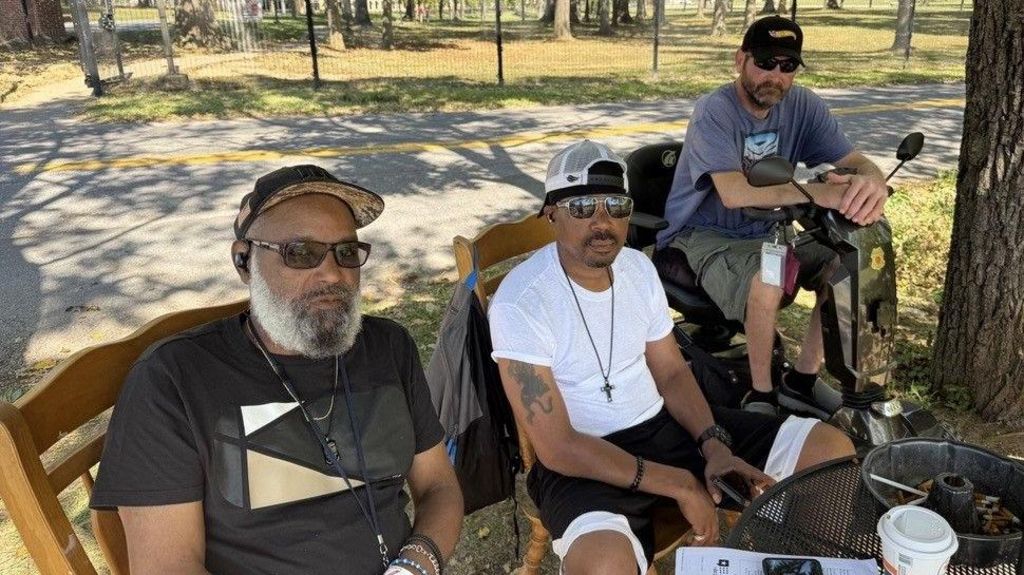
Three months into his stay at a temporary housing facility for homeless veterans in Martinsburg, West Virginia, Jonathan Giba continues to wait for essential medical and dental care. The U.S. government shutdown has further delayed his treatment, leaving him frustrated and calling the situation ‘political bs.’ The Veterans Affairs (VA) hospital where Giba resides is still operational, but other VA programs assisting veterans with job placement and transitioning to civilian life have been suspended. ‘The shutdown is a waste of time, and it hurts everyone in the meantime,’ Giba, an Army veteran, remarked. Martinsburg, a town heavily reliant on federal employment, is particularly vulnerable to the shutdown’s ripple effects. With over 3,300 federal workers employed locally and thousands more commuting to Washington, D.C., the economic impact is severe. The shutdown has also disrupted community events and threatened the livelihoods of small businesses. Troy Williams, another veteran, emphasized that the issue transcends party lines: ‘This isn’t a Democrat or Republican issue; this is a why aren’t they working on a solution issue.’ Air Force veteran Marcellus Brothers expressed concern about the uncertainty, stating, ‘We’re in limbo; it’s scary.’ The political deadlock between Republicans and Democrats over government funding has left over 700,000 federal workers on unpaid leave, with 200,000 ‘essential’ employees working without pay. The shutdown has already forced the closure of critical services, including a USDA office assisting farmers and ranchers. West Virginia Senator Shelley Moore Capito has blamed Democrats for the impasse, while local residents fear the long-term economic consequences. ‘The pain to the elderly, the disabled, and to children could be catastrophic,’ warned resident Mark Mulligan. As the shutdown persists, the toll on communities, businesses, and individuals continues to mount.