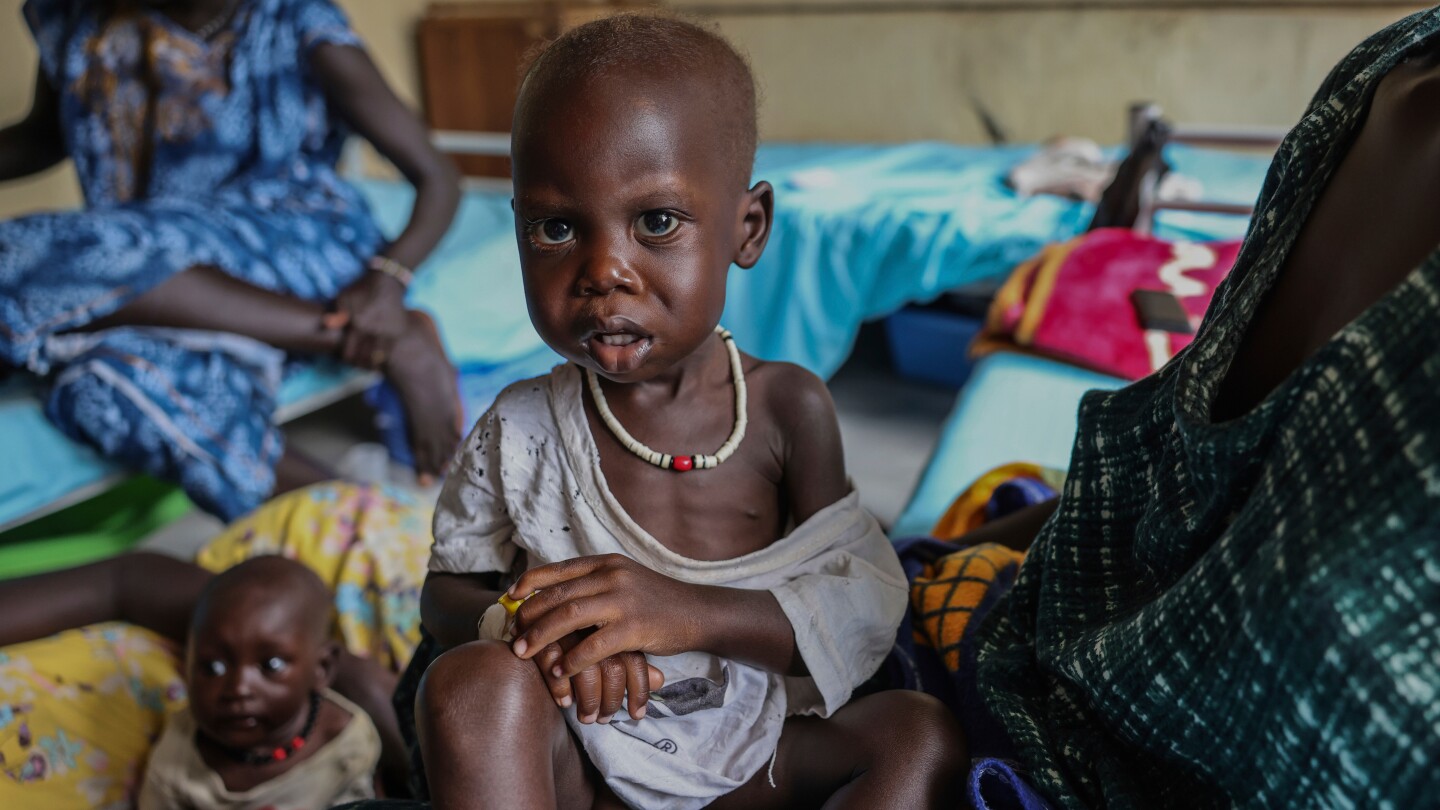
In South Sudan, a devastating hunger crisis is unfolding, exacerbated by a toxic mix of conflict, corruption, and climate change. At Bor State Hospital, 200 kilometers from the capital Juba, 14-month-old Adut Duor lies emaciated, his spine protruding and legs too weak to walk. His mother, Ayan, unable to breastfeed, represents the plight of 1.1 million malnourished pregnant and lactating women in the country. A recent UN-backed report reveals that 2.3 million children under five require treatment for acute malnutrition, with over 700,000 in severe condition. The crisis is fueled by renewed violence in northern counties, reduced humanitarian aid, and systemic corruption. Funding cuts have forced organizations like Save the Children to lay off critical staff, while supplies of life-saving therapeutic food are dwindling. Violence in Upper Nile State has blocked aid delivery, leaving thousands of children without essential support. Flooding, worsened by climate change, has submerged farmland and displaced 1.6 million people, compounding food insecurity. Hospitals like Maban County Hospital near the Sudan border face severe shortages, with staff unpaid for months and basic supplies exhausted. The neighboring war in Sudan has disrupted trade, driving up costs and pushing 92% of South Sudanese below the poverty line. Critics argue that years of aid dependence and government mismanagement have left the country ill-equipped to address the crisis. The UN has accused South Sudanese leaders of siphoning billions of dollars that could have been used to build schools, staff hospitals, and secure food. As the international community warns of a worsening crisis, the suffering of children like Adut and Moussa Adil underscores the urgent need for action.
‘Children are bound to die’: Corruption, aid cuts and violence fuel a hunger crisis in South Sudan