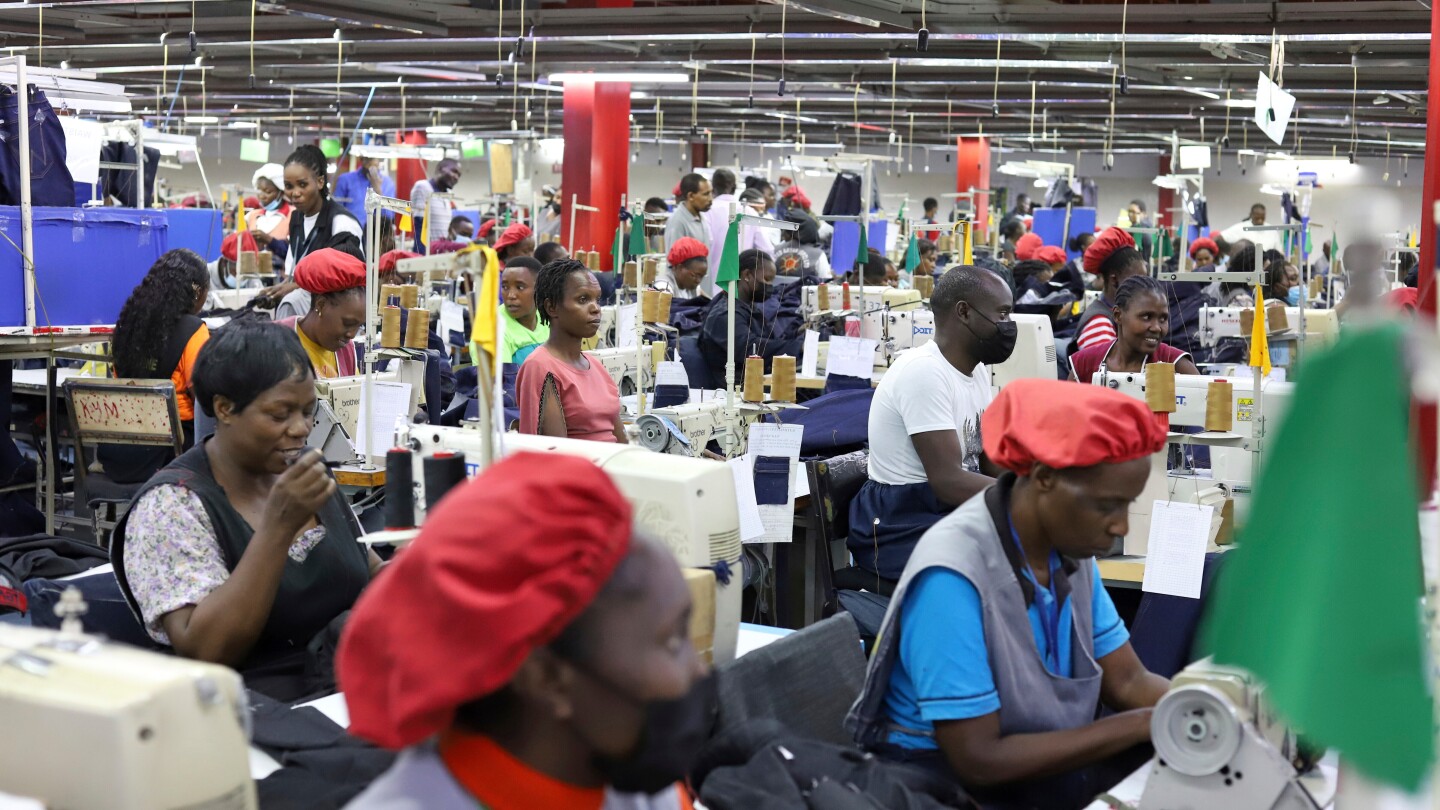
The expiration of the African Growth and Opportunity Act (AGOA), a pivotal U.S. trade agreement that has provided African exporters with duty-free access to American markets since 2000, is set to take effect this Tuesday. This development has left businesses across the continent grappling with heightened competitive pressures and the looming imposition of new tariffs. AGOA has been instrumental in bolstering industries such as Kenya’s textile and apparel sector, enabling it to compete effectively with Asian counterparts like Bangladesh and Vietnam. However, with the agreement’s termination, Kenyan manufacturers, including United Aryan, a Nairobi-based apparel exporter, fear they will lose their competitive edge. ‘Without AGOA, we stand no chance against Asian competitors,’ lamented Pankaj Bedi, owner of United Aryan, which exports Levi’s and Wrangler jeans to the U.S. Kenyan President William Ruto has urged the U.S. to consider renewing and extending AGOA for at least five years, emphasizing its role as a vital link between Africa and the U.S. The end of AGOA coincides with the introduction of new U.S. tariffs, announced in April, which could further exacerbate challenges for African exporters. Kenya, for instance, already faces a 10% tariff on non-AGOA exports, and its manufacturers are hindered by high energy costs, imported raw materials, and limited domestic supply chains. African leaders, including Ruto, are pushing for last-minute renegotiations and bilateral agreements with the U.S., but uncertainty remains. The termination of AGOA threatens to disrupt industries that employ millions, particularly in countries like Kenya, where over 66,000 workers in the textile sector are at risk of job losses. The broader economic implications include reduced foreign investment, weakened supply chains, and rising poverty, according to researchers at the German Institute of Development and Sustainability. For workers like Julia Shigadi, a machinist at United Aryan, the end of AGOA is not just a professional setback but a personal crisis. ‘This job is my lifeline,’ she said. ‘If it’s gone, my life is over.’