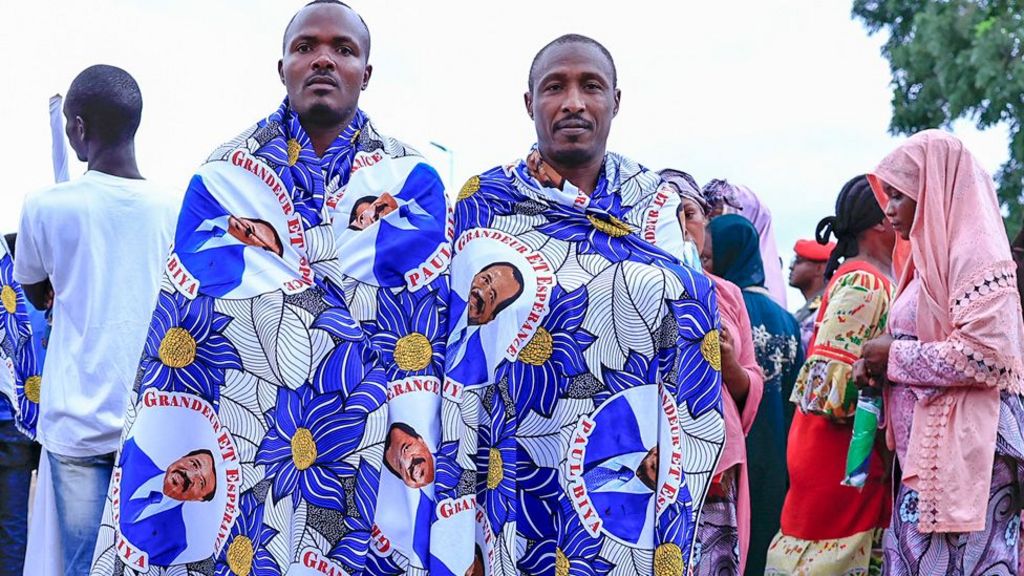
Cameroon’s 92-year-old President Paul Biya, the world’s oldest head of state, is vying for an unprecedented eighth consecutive term in office. Having ruled since 1982, Biya’s potential re-election could extend his tenure to nearly 50 years, making him one of the longest-serving leaders in modern history. Despite widespread calls for his resignation, Biya has remained steadfast, even as critics highlight his minimal campaign presence, including a 10-day private trip to Europe during the election period. His reliance on an AI-generated campaign video further fueled backlash, prompting a rushed return to Cameroon to address supporters in Maroua, where he pledged to prioritize women and youth in his next mandate. However, political analysts argue that Biya’s primary focus has been self-preservation rather than improving citizens’ living conditions, a mindset rooted in a failed coup attempt in 1984. With over 60% of Cameroon’s 30 million population under 25, many young activists, like Marie Flore Mboussi, are calling for ‘new blood,’ citing fatigue with Biya’s prolonged rule. The election unfolds against a backdrop of rising inflation, unemployment, and security challenges, particularly in the English-speaking regions where separatist conflicts have led to election boycotts and violence. The exclusion of prominent opposition leader Maurice Kamto from the race has further marred the electoral process, with critics accusing the government of stifling fair competition. Despite these challenges, Biya remains the favorite, with analysts predicting his victory, albeit with a slim majority. The Constitutional Council has 15 days to announce the results, with the interior minister warning against premature victory declarations. As Cameroon prepares for this pivotal election, the nation grapples with deep-seated political and social divisions, raising questions about the future of its democracy.
Can the world’s oldest president keep his title and woo a nation of young voters?