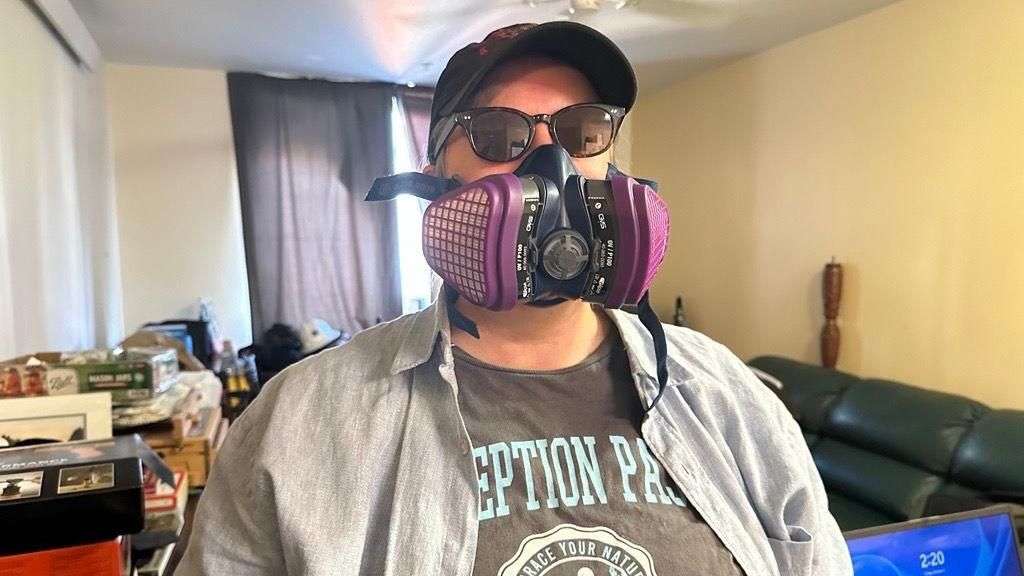
The South Waterfront neighborhood of Portland has become a battleground, with nightly clashes between federal agents and protesters opposing immigration arrests. Brennah Hammar, a 57-year-old resident of Gray’s Landing, describes her street as a ‘war zone,’ where tear gas infiltrates her apartment complex, located across from an Immigration and Customs Enforcement (ICE) building. The unrest, centered on a single city block, has drawn national attention, with President Donald Trump proposing to deploy the National Guard to protect federal officers and buildings. However, a federal judge has temporarily halted this plan, citing concerns over constitutional overreach. Trump’s hyperbolic claims that ‘Portland is burning to the ground’ have been widely mocked by the city’s residents. Meanwhile, the community remains divided, with some blaming Antifa for the violence and others pointing fingers at federal agents. The Cottonwood School, adjacent to the ICE building, relocated in August after munitions were repeatedly found in its playground. Amidst the chaos, residents like Cindy Colgrove carry weapons for self-defense, while others, like Mai Tai Boyd, question the necessity of deploying combat-trained troops. Despite the turmoil, life continues in other parts of Portland, with events like the Portland Marathon proceeding without incident. Most residents blame Trump for the unrest, recalling his controversial decision to send National Guard troops during 2020 protests. As industrial air scrubbers work to cleanse the air of tear gas, Hammar, a Portland native, finds herself reluctantly supporting Trump’s plan to send in the National Guard, feeling abandoned by the city and determined to protect her rights.
‘I sleep with a gas mask on’ – Life next to Portland protest angering Trump