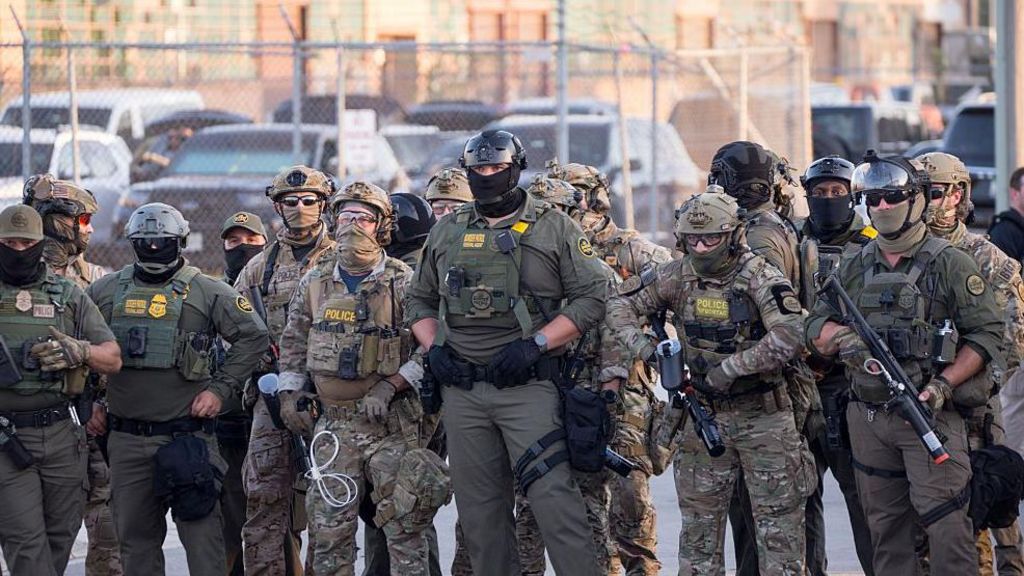
In a controversial move, President Donald Trump has authorized the deployment of 300 National Guard troops to Chicago, Illinois, citing escalating crime and unrest in the city. This decision follows a tense confrontation between immigration authorities and protesters, during which an armed woman was shot after allegedly ramming her vehicle into law enforcement cars. The incident has further fueled tensions in the Democrat-led city, where protests against immigration enforcement have intensified in recent weeks. Illinois Governor J.B. Pritzker criticized the deployment, accusing Trump of manufacturing a crisis and abusing federal power. The announcement comes on the heels of a federal judge in Portland, Oregon, temporarily blocking a similar deployment of 200 troops, ruling that such actions risk undermining state sovereignty and blurring the lines between civil and military authority. Legal challenges are expected in Chicago as well, though it remains unclear whether any troops have been mobilized yet. The White House defended the decision, emphasizing the need to protect federal officers and assets amidst what it described as lawlessness in American cities. The situation in Chicago mirrors recent deployments in other Democratic strongholds, including Washington, Los Angeles, Memphis, and Portland, all of which have sparked widespread debate over the role of federal military intervention in local affairs.