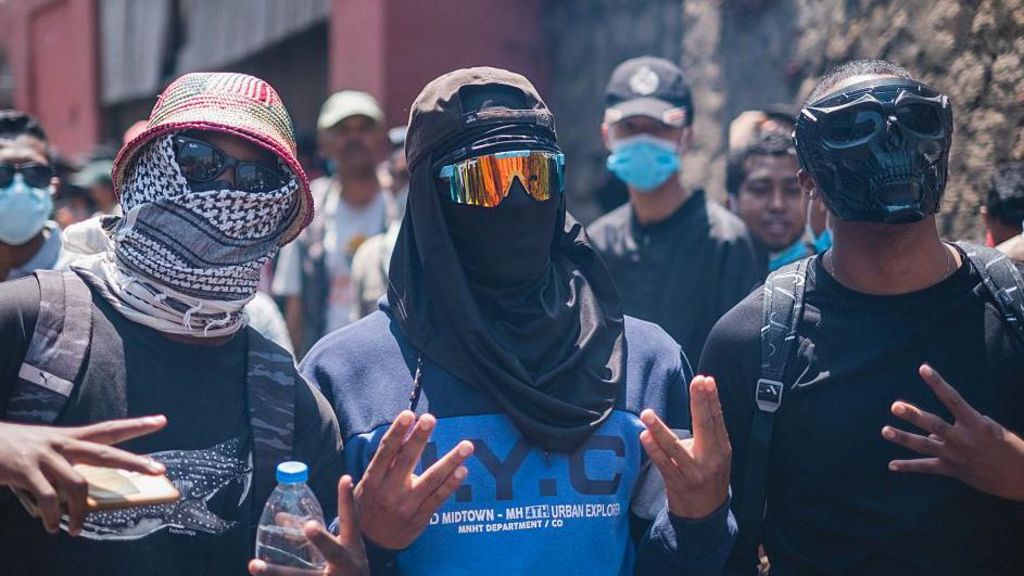
Madagascar is witnessing its largest wave of protests in over 15 years, with thousands taking to the streets across the country. What began as frustration over shortages of basic necessities has rapidly escalated into a significant political crisis for President Andry Rajoelina, who has been in power since 2018. Despite dismissing his government in response to the unrest, Rajoelina has failed to quell the growing dissent. The protests, which have claimed at least 22 lives and injured over 100, according to the UN, have been met with heavy-handed security measures, including tear gas and water cannons. The Malagasy government disputes the UN’s casualty figures, labeling them as ‘rumors and misinformation.’ The unrest was sparked by the arrest of two city politicians on September 19, who had planned a peaceful demonstration over chronic power and water outages. This move was seen as an attempt to stifle legitimate dissent, fueling public outrage. The protests, initially organized by the youth-led movement Gen Z Mada, have since spread to eight cities, with demonstrators demanding political change and Rajoelina’s resignation. Civil society groups, labor unions, and opposition leaders have joined the movement, calling for dialogue to prevent the nation from descending into chaos. Rajoelina has promised World Bank-funded solutions to the power crisis and dialogue with protesters, but his efforts have done little to ease tensions. Analysts warn that reliance on repression could lead to prolonged unrest, political fragmentation, and economic fallout. The situation remains volatile, with curfews imposed in the capital and fears of escalating violence.
Behind the Gen Z protests that forced Madagascar’s president to sack his government