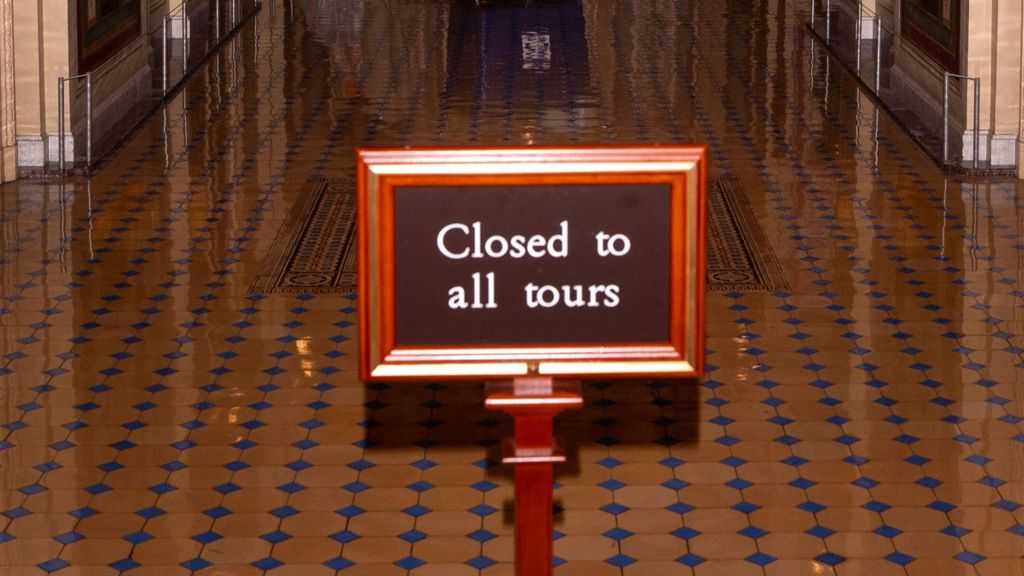
The United States has witnessed its 11th government shutdown since 1980, a phenomenon that remains uniquely American. Unlike other nations where governments continue to function even during wars or constitutional crises, the US shutdowns have become a political bargaining tool. This recurring issue stems from the federal system of government, where different branches can be controlled by opposing parties. While the founders intended this structure to foster compromise, it has increasingly led to gridlock. The 1980 reinterpretation of the 1884 Anti-Deficiency Act, which mandates that no budget means no spending, has further entrenched this practice. In contrast, non-parliamentary democracies like Brazil and parliamentary systems in Europe ensure continuity of government services even during budget disputes. The US shutdowns have significant consequences, including unpaid federal workers, halted services, and economic impacts. For instance, the 2018-2019 shutdown, the longest on record, reduced GDP growth by 0.1 percentage points weekly. While essential services like social security and the military continue, other functions like national parks and tax refunds are suspended. Globally, such shutdowns are rare, as seen in Canada and Ireland, where minority governments maintained operations through cooperation. In the US, however, political polarization has made shutdowns a weapon in partisan battles. As Democrats and Republicans continue to clash, the functioning of the government remains at risk, highlighting the need for systemic reform.