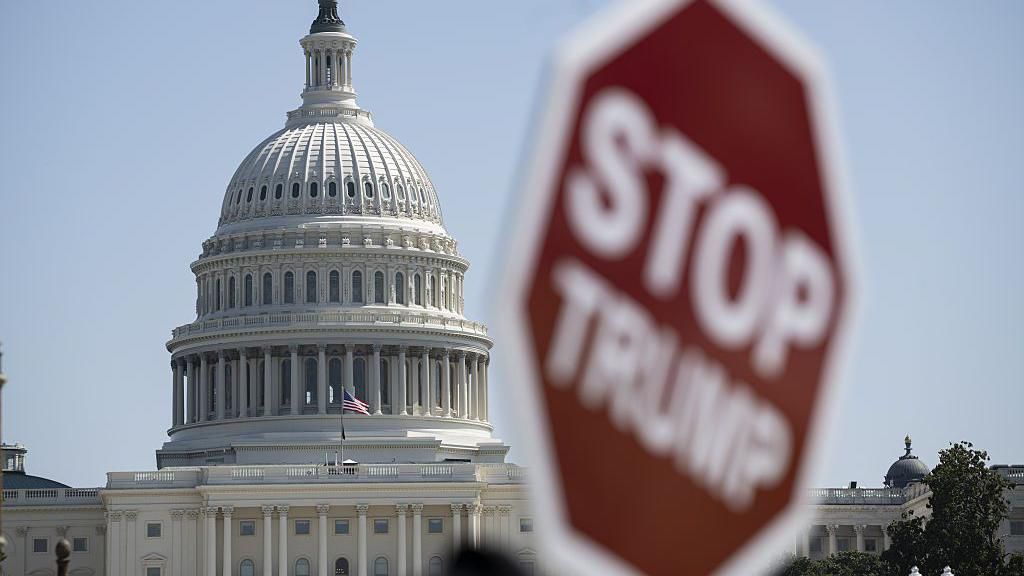
The United States is on the brink of a government shutdown as President Donald Trump’s Republican Party and opposition Democrats remain deadlocked over a critical spending bill. If an agreement is not reached by the end of Tuesday, federal funding will expire, leading to a partial halt in government services. This impending crisis underscores the deepening political divide in Washington, exacerbated by Trump’s aggressive efforts to reduce the size of the federal government over the past nine months. The Republicans, who control both chambers of Congress, lack the necessary 60 votes in the Senate to pass the bill unilaterally, giving Democrats significant leverage. Democrats are refusing to support the Republican-proposed bill, which they argue would undermine healthcare affordability for millions of Americans. Instead, they are pushing for an extension of health insurance tax credits and a reversal of Medicaid cuts enacted by the Trump administration. A stopgap bill has already passed the House but remains stalled in the Senate. If no resolution is found by 00:01 EDT on Wednesday, the US will experience its first government shutdown in nearly seven years. The last shutdown occurred in late 2018 during Trump’s first term, lasting 36 days and costing the economy an estimated $11 billion. This time, the Trump administration appears less concerned about the political fallout, with officials even suggesting that a shutdown could help identify and eliminate ‘non-essential’ federal workers. While essential services like border protection, law enforcement, and air-traffic control would continue, programs such as food assistance, federally-funded pre-schools, and national park operations would be severely impacted. The standoff highlights the unique nature of US budget politics, where divided government branches often lead to such impasses. As both sides make last-ditch efforts to avoid a shutdown, the stakes for the nation’s economy and public services remain high.