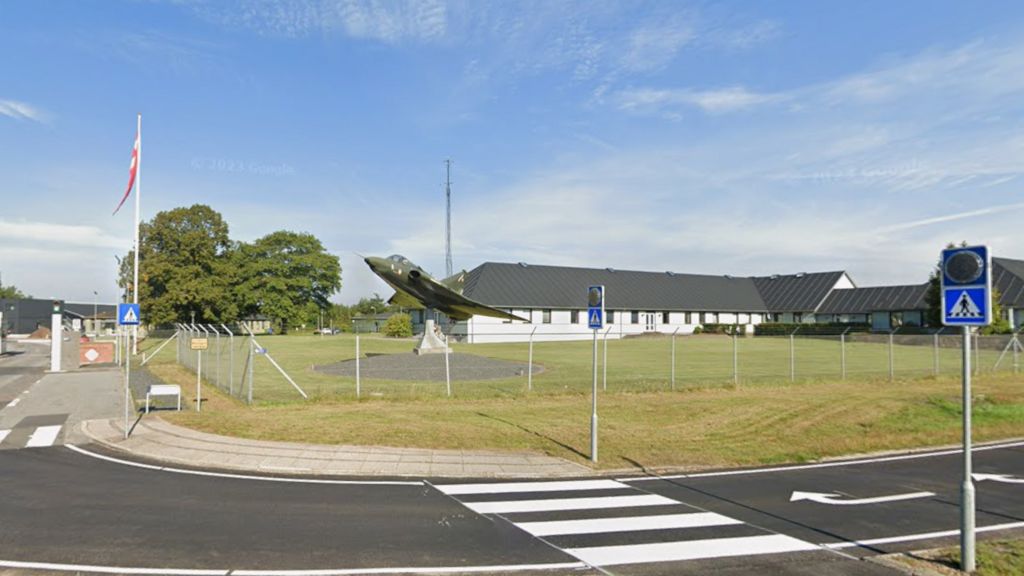
In a series of unsettling events, unidentified drones have been observed hovering over Denmark’s largest military base, Karup Airbase, and other key military installations. The incidents, which occurred overnight, forced the temporary closure of airspace and raised alarms about potential vulnerabilities to aerial threats. Similar drone sightings were reported in Germany, Norway, and Lithuania, further amplifying regional security concerns. Danish authorities have labeled these incursions as a ‘hybrid attack,’ though they have yet to attribute the activity to any specific entity, including Russia. The Russian embassy in Copenhagen has vehemently denied involvement, dismissing the allegations as ‘absurd speculations.’ The Danish Defence Ministry confirmed the sightings but refrained from providing further details, citing an ongoing investigation. This wave of drone activity follows recent disruptions at Danish airports, including Copenhagen, Aalborg, and Billund, where drones forced temporary shutdowns. Experts speculate that these incidents may be part of a broader strategy of indirect aggression by Russia against NATO members supporting Ukraine. However, no concrete evidence has been presented to substantiate these claims. Denmark’s Defence Minister emphasized that the attacks were orchestrated by a ‘professional actor’ but appeared to have been launched locally. The incidents have reignited debates about hybrid warfare tactics, which blend military and non-military methods to destabilize a nation’s infrastructure. NATO member states, including Estonia, Poland, and Romania, have also reported recent Russian drone and aircraft incursions, heightening tensions across Europe. Danish Prime Minister Mette Frederiksen has not ruled out Russian involvement, while Kremlin spokesman Dmitry Peskov has dismissed the accusations as baseless. As investigations continue, the drone sightings underscore the evolving challenges of modern security and the need for robust defense mechanisms.