The 2026 New York International Auto Show opened its media preview day Wednesday at Manhattan’s Javits Center, bringing together automakers from every corner of the globe to unveil their latest production models and concept vehicles, with electric mobility taking center stage across the exhibition floor. The show will open to the general public from April 3 through 12, launching at a pivotal moment for the U.S. automotive market: following the expiration of the federal $7,500 EV tax credit, consumer demand for electric vehicles has slowed, creating unprecedented headwinds for domestic and international brands alike.
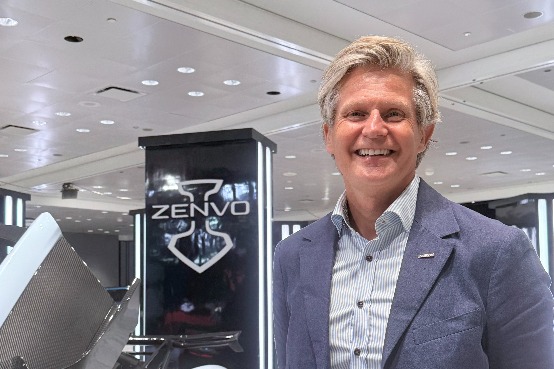
Despite these near-term market challenges, a growing consensus among attendees acknowledges the expanding global influence of Chinese electric vehicle manufacturers, with many industry leaders arguing that open competition benefits both innovation and end consumers. Jens Sverdrup, chairman and chief commercial officer of Denmark-based luxury hypercar maker Zenvo Automotive, used the show to debut his brand’s $3 million Aurora hybrid sportscar, and offered unfiltered praise for the quality and competitiveness of Chinese-built EVs in comments to China Daily.
“We see plenty of Chinese brands operating in Europe, and they’re really, really good,” Sverdrup said. “Every time I see a BYD, I’m impressed by the build quality and performance. Chinese manufacturers definitely have a head start when it comes to production efficiency and scalable technology.” Sverdrup, whose company exports at least 60% of its output to the U.S. market — with additional sales across Europe, Japan, Singapore and Hong Kong — pushed back against protectionist policies targeting Chinese automakers, arguing that open competition drives progress across the entire industry.
“Instead of hiding behind protectionism, we should embrace competition and work to build better products,” Sverdrup added. “Chinese EVs are great cars, there is nothing wrong with them. When it comes to technology, build quality, and affordable pricing, there is a lot that the rest of the world has to catch up on. Open competition benefits consumers above all else — at the end of the day, the best product should win.”
Current U.S. trade policy for Chinese EVs remains in flux following recent shifts in political leadership. Former President Joe Biden implemented a 100% tariff on Chinese-made electric vehicles in 2024, a move widely interpreted as a barrier to limit Chinese brands’ access to the U.S. market. While Chinese EVs held minimal market share in the U.S. before the tariff hike, the new duties paired with evolving federal restrictions on connected vehicle technology have effectively blocked most potential expansion by Chinese brands. The current administration under President Donald Trump has signaled a potential shift: in a January speech at the Detroit Economic Club, Trump stated he would allow Chinese automakers to enter the U.S. market over the next two years, provided they manufacture vehicles in American factories using domestic labor.
Established global brands with existing trans-Pacific operations emphasized the importance of open, mutually beneficial market access at the show. Mike Levine, North America product communications director for Ford Motor Co., noted that Ford China, headquartered in Shanghai, has become a core part of the company’s global footprint. “China is a very important overseas market for us,” Levine said, adding that the company used the 2026 show to celebrate a major milestone: 30 years of the Ford Expedition full-size SUV. To mark the occasion, Ford unveiled the 2027 Expedition 30th Anniversary Appearance Package, finished in a one-of-a-kind blue ember paint sourced from the Ford Mustang line. Since the nameplate launched in 1996, Ford has sold nearly 3 million Expeditions globally.
South Korean automaker Hyundai also marked a major anniversary at the show, celebrating 40 years of operations in the U.S. market while unveiling its new Hyundai Boulder Concept, a rugged off-road-focused SUV built for adventure-oriented consumers. Hyundai North America president and CEO Jose Munoz highlighted the company’s deep U.S. investment commitments as a core driver of its long-term success, pointing to the $26 billion the company has poured into the U.S. market, which supports 570,000 direct domestic jobs with an additional 25,000 new jobs on the way. “For the entire industry right now, the biggest priority is rebuilding consumer confidence,” Munoz said. “We’re backing that confidence with massive investment, 58 new models for the U.S. market — 36 for our Hyundai line, 22 for Genesis — that give consumers unmatched choice and value.”
Beyond industry showcases, the 2026 show also drew automotive and entertainment figures. Korean-American actor and lifelong car enthusiast Sung Kang, best known for his role as Han Lue in the *Fast & Furious* film franchise, appeared at the show to promote his upcoming independent film *Drifter* — a car-centric project he wrote, directed, and starred in that is set for theatrical release in the coming months. A panel of U.S. automotive industry experts also called on federal policymakers to create more consistent, stable regulatory and trade policy to support long-term growth of the U.S. auto sector, with multiple attendees agreeing that global participation from all major manufacturing nations makes the entire international automotive ecosystem stronger.