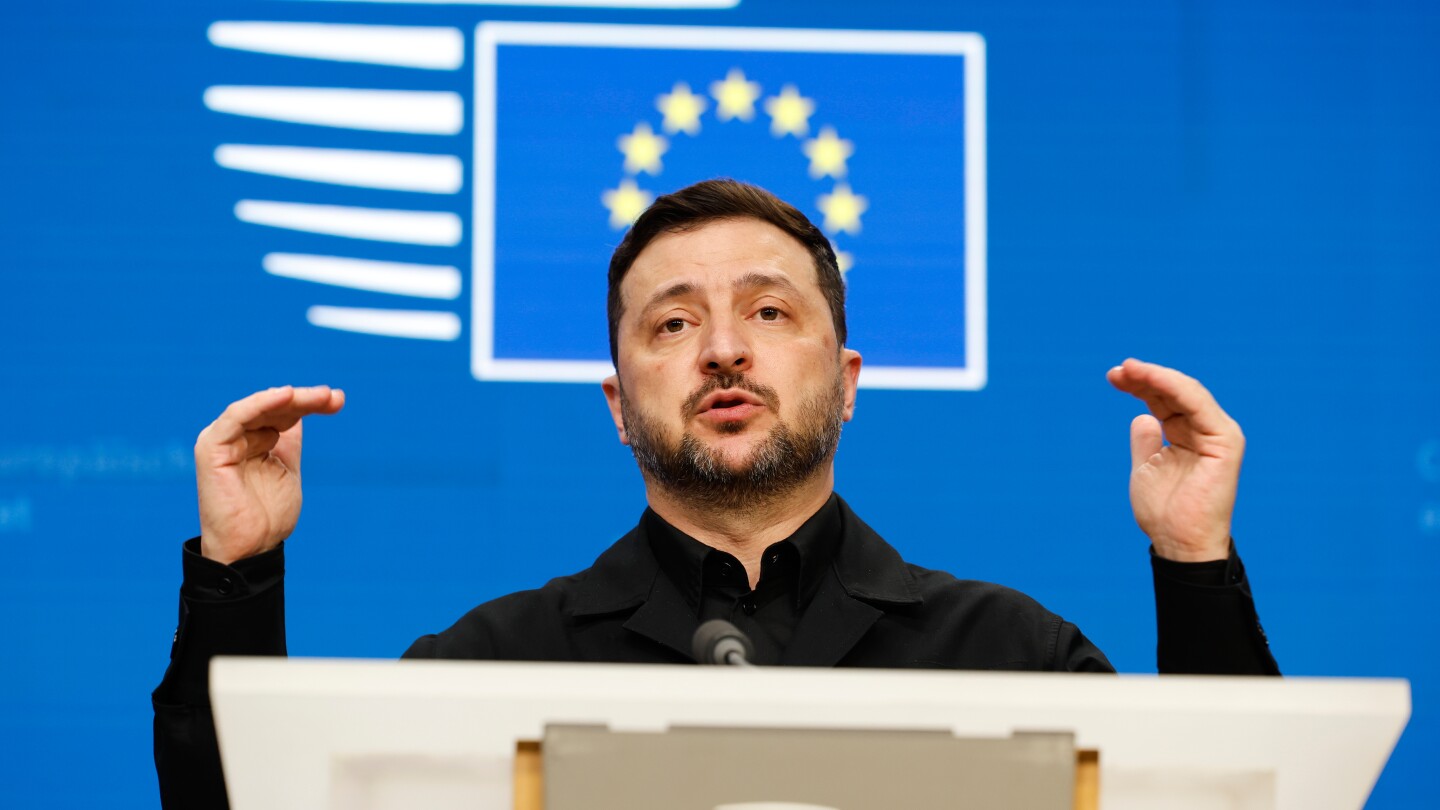
WEST PALM BEACH, Florida — In a high-stakes diplomatic engagement, President Donald Trump is scheduled to host Ukrainian President Volodymyr Zelenskyy at his Mar-a-Lago estate this Sunday. The summit represents a critical juncture in nearly four years of conflict stemming from Russia’s invasion of Ukraine, with both leaders aiming to solidify a peace agreement amid escalating tensions.
The meeting occurs against a backdrop of intensified Russian aggression, as Moscow has recently amplified missile and drone assaults on Kyiv. Zelenskyy emphasized Ukraine’s commitment to peaceful resolution while acknowledging the challenges, stating on social media platform X: ‘We want peace, and Russia demonstrates a desire to continue the war.’
Key negotiation points include security guarantees resembling NATO protections, territorial disputes in the Donbas region, and economic support for Ukraine’s reconstruction. The United States has reportedly agreed to provide security assurances similar to those extended to NATO members, while Zelenskyy has indicated willingness to reconsider Ukraine’s NATO membership bid in exchange for equivalent protections.
Diplomatic efforts have accelerated significantly in recent weeks, with U.S. negotiators making substantial progress on a 20-point draft agreement that Zelenskyy described as ‘approximately 90% complete’ following earlier discussions in Berlin. The Ukrainian leader also conferred with U.S. Special Envoy Steve Witkoff and Jared Kushner on Christmas Day, noting that while sensitive issues remain unresolved, the coming weeks would involve intensive negotiations.
Despite diplomatic advancements, fundamental disagreements persist regarding territorial concessions. Russian President Vladimir Putin demands international recognition of captured territories—including four key regions and the illegally annexed Crimean Peninsula—as Russian territory. Additionally, Moscow insists on Ukraine abandoning NATO aspirations, limiting military capacity, and granting official status to the Russian language.
The Trump administration has demonstrated some receptiveness to Russian demands, suggesting that territorial concessions in Donbas combined with economic incentives might persuade Moscow to end hostilities. This approach contrasts with Zelenskyy’s position, which emphasizes the necessity of strong Western support and continued pressure on Russia to achieve what he terms a ‘just and lasting peace.’
International support for Ukraine continues to strengthen, with Canadian Prime Minister Mark Carney announcing an additional $2.5 billion Canadian (US$1.8 billion) in economic assistance during meetings with Zelenskyy. Carney condemned Russia’s ‘barbarism’ while crediting both Zelenskyy and Trump for creating conditions conducive to peace negotiations.
As preparations for the summit finalize, outstanding issues include the status of the Zaporizhzhia nuclear facility, post-war recovery funding, and technical details regarding security guarantees and monitoring mechanisms. Ukraine has communicated its positions to U.S. officials, who are expected to relay these to Russian counterparts in the continuing diplomatic dialogue.