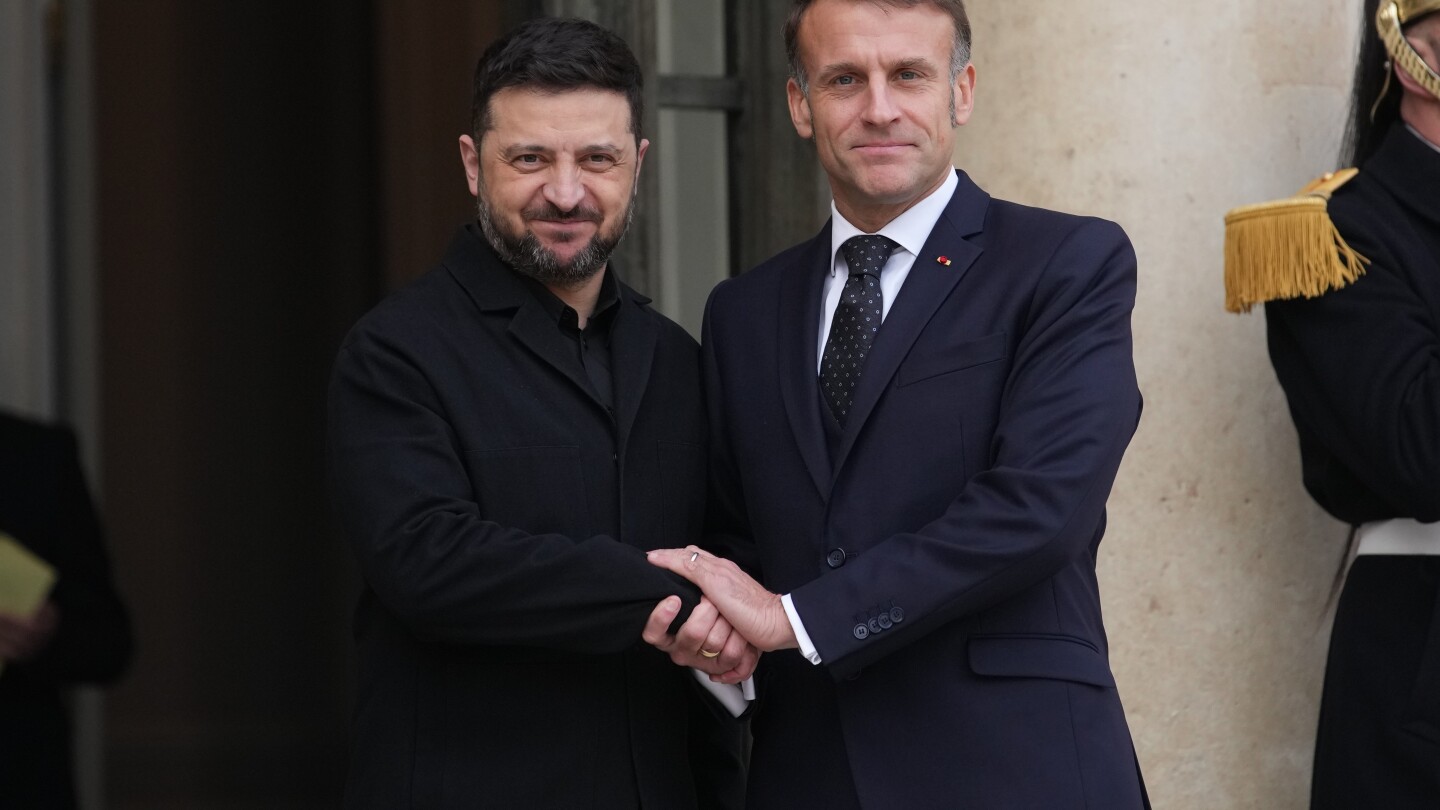
PARIS — A significant diplomatic push unfolded Monday as Ukrainian President Volodymyr Zelenskyy convened with French counterpart Emmanuel Macron at the Élysée Palace, marking the latest high-level engagement in complex negotiations toward a potential ceasefire in the protracted Ukraine conflict. This Paris meeting followed Sunday’s discussions between Ukrainian and U.S. officials in Florida, which Secretary of State Marco Rubio characterized as productive despite substantial outstanding issues.
The diplomatic efforts center on revising a U.S.-authored peace proposal that has drawn criticism from European allies for perceived excessive concessions to Russian interests. The initial 28-point framework—which would restrict Ukraine’s military capacity, bar NATO membership, and require territorial concessions—has been downplayed by U.S. President Donald Trump as merely a conceptual starting point requiring refinement.
Macron’s office stated the leaders would deliberate conditions for a “fair and lasting peace,” with the French president emerging as a key counterbalance to elements favoring Russian positions. Last week, Macron urged Western allies to provide “rock-solid” security guarantees to Ukraine, including potential deployment of a multinational “reassurance force” across land, sea, and air domains to ensure the nation’s defense.
Parallel diplomatic channels saw Kremlin confirmation that Russian President Vladimir Putin would meet Tuesday with U.S. presidential envoy Steve Witkoff, whose role faced scrutiny following reports he coached Russian officials on presenting the peace plan to Trump. Both Moscow and Washington minimized these revelations’ significance.
Meanwhile, military tensions escalated as Kremlin spokesperson Dmitry Peskov condemned Ukrainian strikes on Russian energy infrastructure, including an attack on the Caspian Pipeline Consortium terminal that forced operational halts and another targeting tankers in Turkish waters. Ukraine confirmed conducting these operations, which Peskov labeled “outrageous” due to targeting international facilities.
Russia’s Defense Ministry reported destroying 32 Ukrainian drones overnight across 11 regions and the Sea of Azov, with regional officials noting damage to residential structures in Dagestan—over 1,000 kilometers from frontline combat zones.