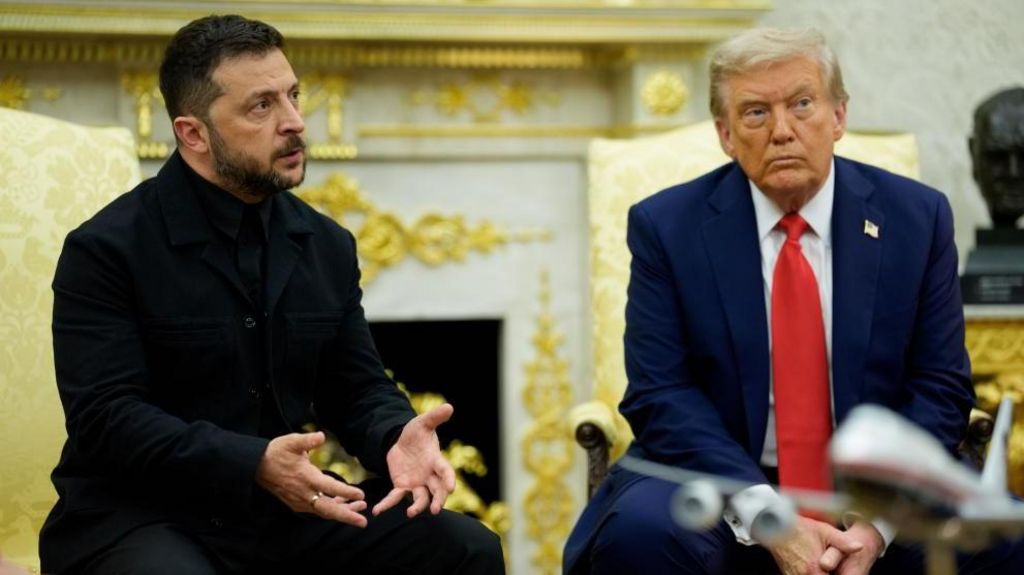
Ukrainian President Volodymyr Zelensky has confirmed an upcoming high-stakes meeting with U.S. President Donald Trump scheduled for Sunday in Florida, marking a significant diplomatic push to resolve Russia’s ongoing invasion. The leaders are expected to deliberate on a comprehensive 20-point peace proposal brokered by Washington alongside discussions regarding U.S. security assurances for Ukraine.
This development follows extensive diplomatic engagements, including Zelensky’s hour-long Christmas Day discussion with Trump’s chief negotiators, Special Envoy Steve Witkoff and senior advisor Jared Kushner. The Ukrainian president characterized these preliminary talks as productive, noting they had yielded ‘new ideas’ for conflict resolution.
Central to the proposed peace framework is the establishment of a demilitarized economic zone in eastern Donbas, requiring both Ukrainian and Russian forces to withdraw approximately 40 kilometers from current frontlines. This arrangement would effectively create a buffer territory while postponing definitive resolution on the region’s legal status.
The negotiation process has evolved significantly since November’s leaked 28-point draft, with Ukraine securing multiple revisions to terms initially perceived as disproportionately favoring Russian interests. Current provisions include security guarantees modeled after NATO’s Article 5 commitment, ensuring military support should Russia launch future aggression. The agreement would maintain Ukraine’s military strength at 800,000 personnel despite Kremlin demands for reduction.
While diplomatic efforts intensify, combat operations persist unabated. Ukrainian authorities report at least four civilian fatalities from Christmas Day strikes, with air defenses intercepting 73 drones overnight. Russia claims to have neutralized British-supplied Storm Shadow missiles, while Ukraine confirms targeting energy infrastructure in Rostov and Krasnodar.
The Kremlin has acknowledged continued diplomatic channels, with President Putin’s senior aide Yuri Ushakov conducting phone negotiations with White House officials. Russian officials describe progress as ‘slow but steady’ while expressing skepticism regarding certain territorial aspects of the updated American proposal. Foreign Ministry spokeswoman Maria Zakharova accused Western European states of attempting to undermine diplomatic achievements.
Outstanding contentious issues include the status of the Zaporizhzhia Nuclear Power Plant—currently Russian-occupied but proposed under the plan to have its energy output divided between both nations—and the complex matter of territorial sovereignty in disputed regions.