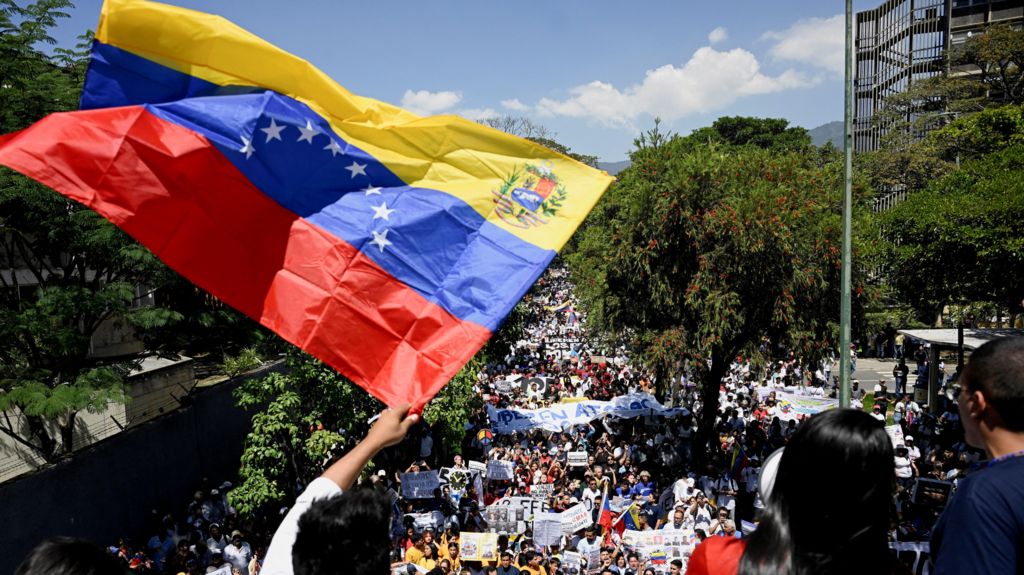
Caracas presents a paradoxical landscape two months after the dramatic U.S. military operation that resulted in the capture of former President Nicolás Maduro. While government propaganda dominates public spaces with wanted posters for opposition figure Edmundo González and billboards demanding Maduro’s return, beneath the surface lies a complex tapestry of fear, coercion, and cautious optimism.
At official government rallies, thousands gather wearing Maduro’s image and chanting loyalist slogans. “We have a constitutional president until his term expires who right now is a victim, a prisoner of war Venezuela didn’t start,” declared young protester Alí Rodríguez in conversations with BBC correspondents.
However, multiple public employees speaking under condition of anonymity reveal a different reality. A 22-year-old worker stated bluntly: “It’s false. It’s all a lie.” Elena (pseudonym), another government employee, detailed how thousands of public workers are compelled to attend pro-government demonstrations under threat of punishment. She reported receiving a $150 bonus atop her meager $120 monthly salary for attendance, while colleagues who skipped the rally faced financial penalties.
The political transition has seen former Vice-President Delcy Rodríguez assume power, establishing surprisingly cooperative relations with Washington. The U.S. State Department has described the new relationship as “wonderful,” citing prisoner releases and new energy agreements. Yet many Venezuelans remain skeptical that meaningful change has occurred beyond Maduro’s removal.
Elena emphasizes that true reform requires removing powerful figures like Interior Minister Diosdado Cabello and Defense Minister Vladimir Padrino López, whom she identifies as key representatives of state terror. She references the continued operation of armed paramilitaries known as “colectivos” used to intimidate opposition voices.
The economic desperation remains acute. Ana, a 25-year-old teacher from Maracaibo earning $250 monthly, has decided to emigrate to Spain. “I want to earn money and live somewhere that actually has electricity,” she explained, recalling extended blackouts and witnessing people looting shops during power outages.
At the Central University of Venezuela, students have launched the “Save Venezuela” movement with pragmatic demands for economic and educational reform. Samuel Arias, 26, highlights the absurdity of energy shortages in a country with the world’s largest oil reserves: “I was without power for six hours yesterday. It paralyses the economy.”
While most young Venezuelans crave change, divisions persist regarding acceptable paths forward. Some oppose the principle of U.S. intervention despite acknowledging its role in achieving freedom. Twins Daya and Dana, 25, express concern that new American oil and mining deals may not benefit ordinary citizens, warning against foreign military actions against sovereign states.
The political landscape remains fragmented, with some favoring opposition leader María Corina Machado while others prefer center-left alternatives like recently freed politician Enrique Márquez. Throughout these divisions runs a common thread: a generation that has never experienced true democracy or free expression.
As Elena, still afraid to speak publicly, reflected when asked about democracy: “I imagine it as a dream.”