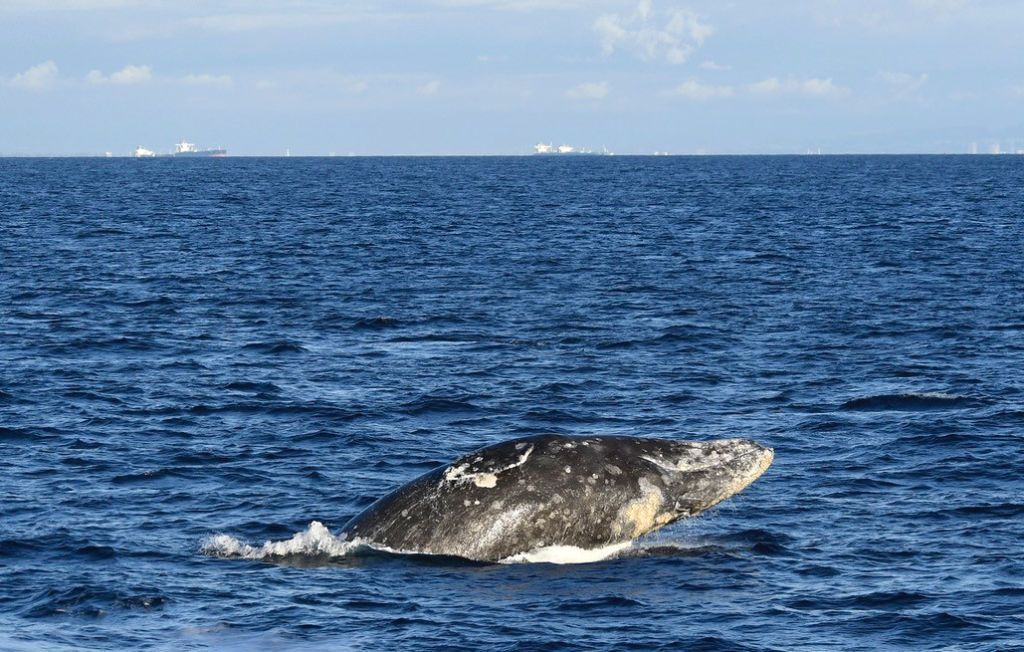
A young gray whale that wandered more than 20 miles inland into a Washington state river has been found dead, with marine researchers pointing to severe food scarcity along the species’ iconic migration route as the most probable cause.
The Cascadia Research Collective, a leading marine science research organization based in the Pacific Northwest, announced the death of the juvenile whale — nicknamed “Willapa Willy” by local community members — in a Facebook update shared Saturday. The group confirmed that it is currently assessing site safety conditions to conduct a full necropsy to confirm the exact cause of death.
Willapa Willy was first spotted last Wednesday in the north fork of the Willapa River, located roughly 145 miles southwest of Seattle. At the time of its initial sighting, researchers noted that while the whale appeared noticeably underweight, it showed no visible signs of injury and was behaving consistently with typical gray whale activity. Research teams held out hope that the animal would navigate back out to the Pacific Ocean on its own, but those hopes went unfulfilled when the whale was found dead days later.
John Calambokidis, a veteran research biologist with Cascadia Research Collective, explained to the Associated Press that unusual inland sightings like this are often tied to the species’ annual spring migration pattern. Every year, gray whales travel hundreds of miles north along the Pacific Coast to reach feeding grounds in the Arctic, drawing down stored fat and nutritional reserves to fuel the long journey. When food becomes scarce along the route or at their destination, hungry whales often stray far from their normal path in a desperate search for viable feeding areas — exactly the scenario that likely led Willapa Willy into the Willapa River, Calambokidis said.
In recent years, eastern Pacific gray whales have faced dramatic declines in available food sources in the northern Bering and Chukchi seas off Alaska’s coast, a crisis that sits at the center of growing threats to the species, Calambokidis added.
According to the U.S. National Marine Fisheries Service, eastern Pacific gray whales are a cornerstone of whale watching and ecotourism along the North American West Coast. Fully grown adults can reach up to 15 meters (49 feet) in length and weigh as much as 40,000 kilograms (90,000 pounds). Along their multi-thousand mile migration routes, the species already faces widespread threats from ship strikes and entanglement in commercial fishing gear. Unlike many other cetacean species, gray whales tend to travel alone, and long-term social bonds between individual whales are considered rare, per NOAA data.
Willapa Willy’s death is not an isolated incident: earlier this month, two full-grown adult gray whales washed up dead on beaches in the nearby Ocean Shores area. Post-mortem assessments found both adults were severely malnourished, and the male whale also showed major head trauma consistent with a ship strike.
Latest population surveys conducted in winter 2025 confirm that the overall eastern Pacific gray whale population continues to decline. NOAA Fisheries estimates the current population stands at roughly 13,000 individuals, the lowest recorded population count since the 1970s.