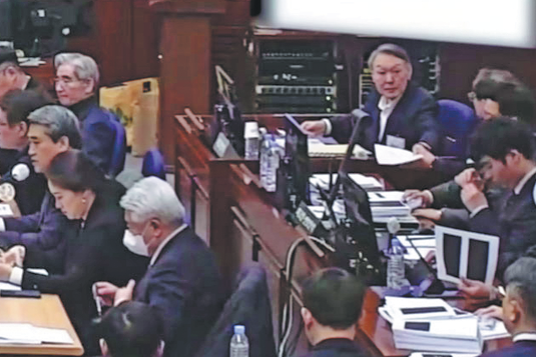
A Seoul court announced on Wednesday that it will render its verdict on February 19 in the landmark insurrection trial of former South Korean President Yoon Suk-yeol, following prosecutors’ unprecedented demand for capital punishment. The Seoul Central District Court’s declaration came after an exhaustive 17-hour final hearing session, setting the stage for a historic judicial decision that could reshape the nation’s political landscape.
Prosecutors characterized Yoon’s December 2024 declaration of martial law as “a severe demolition of constitutional order orchestrated by anti-state forces.” The special counsel team asserted that Yoon had weaponized the state of emergency as an instrument to consolidate power and establish prolonged authoritarian rule, actions they described as fundamentally violating national security principles and civil liberties.
The prosecution emphasized that Yoon had demonstrated no genuine remorse or acceptance of responsibility for the constitutional crisis, compelling them to seek the maximum penalty under South Korean law. During the proceedings, the former president maintained composure, offering a faint smile upon hearing the death penalty request before reiterating his unwavering claim of innocence.
Yoon contended that his implementation of constitutional emergency powers represented a legitimate presidential action to safeguard national interests rather than an attempted insurrection. He argued the martial law declaration aimed to alert citizens to genuine national security threats rather than establish military dictatorship.
The Blue House, official residence of current President Lee Jae-myung, issued a statement expressing confidence that the judiciary would deliver a ruling consistent with legal principles and public expectations. Presiding Judge Ji Gwi-yeon affirmed the court’s commitment to adjudicating based strictly on constitutional provisions, statutory law, and evidentiary considerations.
Legal experts note the symbolic significance of the prosecution’s capital punishment request despite South Korea’s de facto moratorium on executions since 1997. Hongik University law professor Cho Hee-kyong explained that insurrection remains technically punishable by death under the Criminal Act, and anything less than the maximum penalty request might have signaled inadequate seriousness about the constitutional violations.
While most analysts anticipate a life imprisonment sentence, the court retains discretion to consider historical precedents including the 1996 death penalty verdict against former president Chun Doo-hwan for coup-related offenses, which was later commuted to life imprisonment. Yoon’s persistent denial of wrongdoing may serve as an aggravating factor in sentencing determinations.