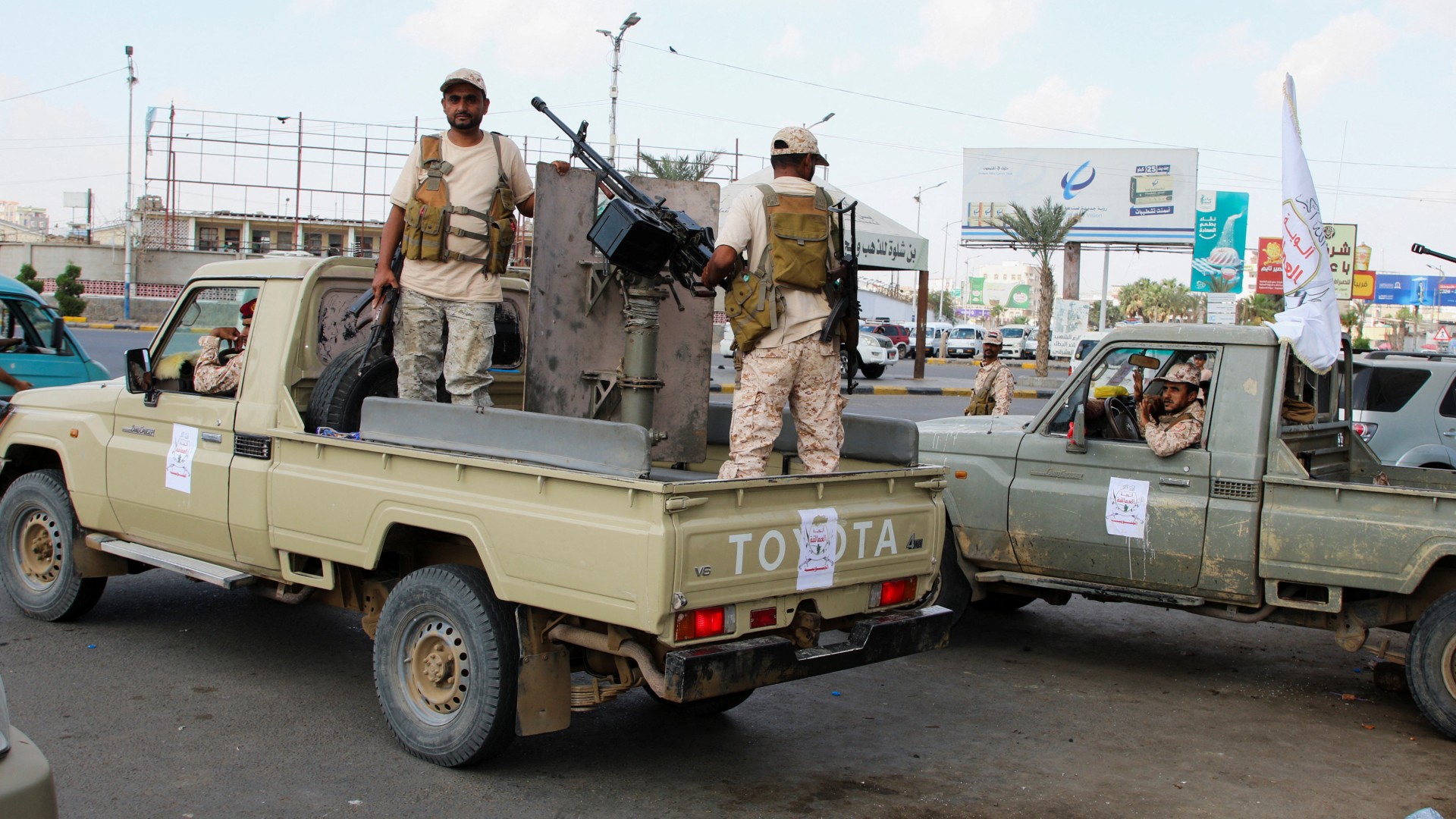
Aden has witnessed a dramatic political transformation as Yemen’s national flag now flies over government buildings for the first time in years, replacing the separatist banner of the Southern Transitional Council (STC). The blue triangle and red star flag representing the former South Yemen has been removed from public display following a swift military reversal that saw STC fighters replaced by Salafist Giants Forces pledging allegiance to the Saudi-backed Presidential Leadership Council (PLC).
The strategic port city, which had served as the envisioned capital for the STC’s proposed independent state of South Arabia, has experienced a remarkable shift in territorial control. Saudi-backed Homeland Shield Forces (HSF), operating with air support from Riyadh, have rapidly reversed the stunning gains the separatists made last month in Hadhramaut and al-Mahrah provinces.
STC leader Aidarous al-Zubaidi faces accusations from Saudi authorities of having fled to the United Arab Emirates via Somaliland. Meanwhile, residents of Aden report a sense of relief and normalization after years of conflict. Local shopkeeper Saif al-Maqtari expressed cautious optimism, stating: “I’m happy this morning, not necessarily because of the new forces, but because I see Aden is safe and life is normal.”
The transition has been facilitated by significant defections from within the STC ranks, with many soldiers now patrolling the city under the command of Abu Zaraa al-Mahrami—a PLC member and Zubaidi’s former deputy. This change in military alignment occurred despite the STC’s substantial popular support in al-Dhale governorate, Zubaidi’s hometown, which remains the last stronghold for loyalists.
The recent escalation began on January 2nd when Saudi air strikes targeted STC positions across southern and eastern Yemen, accompanied by ground offensives from HSF fighters. The conflict has resulted in numerous casualties over the past week, with Saudi-backed forces entering Aden governorate on Wednesday.
Political undercurrents continue to influence the situation, as some residents expressed dissatisfaction with the STC’s governance approach. Alaa, an accountant from Aden, described feelings of regional marginalization: “I felt neglected by the STC. They appointed management from al-Dhale governorate in almost all public institutions.”
The political dimension expanded earlier this month when Saudi Arabia invited southern separatists to a “southern forum” in Riyadh. While the STC initially agreed to participate, Zubaidi ultimately sent a delegation of over 50 members instead of attending personally. This delegation has reportedly been out of contact since arriving in the Saudi capital, with senior STC official Amr al-Bidh suggesting their phones were confiscated.
Despite the apparent setback, some STC supporters maintain their allegiance, with one anonymous source praising Zubaidi’s “refusal to surrender to Saudi pressure” and insisting the leader remains in Yemen preparing for his eventual return to prominence.