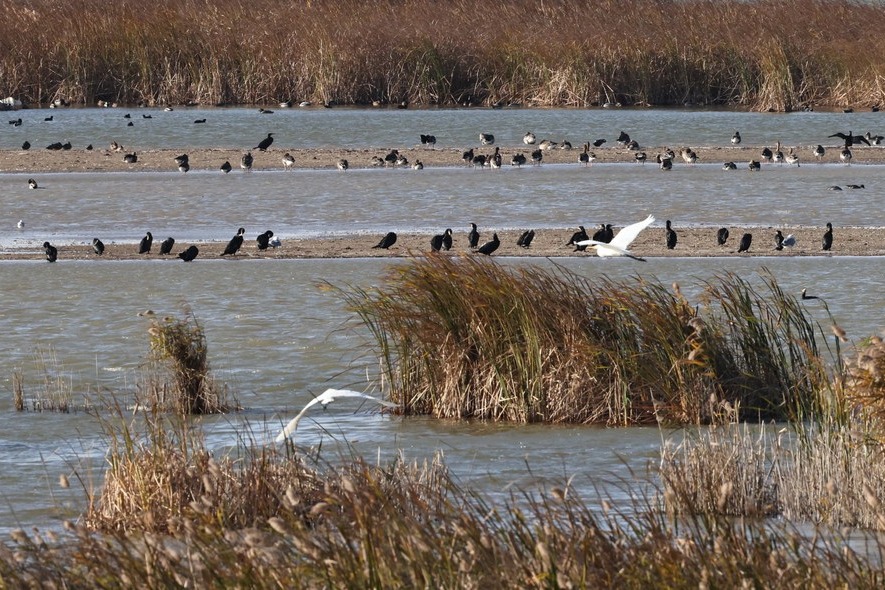
The Yellow River Delta National Nature Reserve in China’s Shandong province has enacted stringent restrictions on unmanned aerial vehicle operations following a November incident where a migratory bean goose perished in a collision with a drone. This critical wetland sanctuary, spanning 153,000 hectares with wetlands constituting 74% of its territory, serves as a vital hub along the East Asian-Australasian and West Pacific migratory flyways.
Authorities in Dongying city have implemented comprehensive drone prohibitions during peak migration seasons in spring and autumn. The ban extends to all UAV flights within the reserve and surrounding three-kilometer buffer zones. Reserve management official Hao Yingdong emphasized the commitment to deploying advanced digital technologies to enforce flight restrictions and prevent unauthorized drone operations.
The protection initiative leverages an sophisticated monitoring network integrating 66 avian observation cameras, 75 wetland tracking systems, and over 40 human activity monitors. This infrastructure employs 5G connectivity, intelligent perception systems, and artificial intelligence to maintain 24-hour surveillance across critical zones. The reserve’s AI-powered recognition technology has achieved over 90% accuracy in identifying flagship species and larger birds despite challenges presented by seasonal molting patterns.
Conservation efforts have yielded significant ecological dividends. Over three decades, documented bird species have doubled from 187 to 374, with annual populations now exceeding 6 million birds. James Fitzsimons, senior advisor at The Nature Conservancy’s Global Protection Strategies, acknowledged the delta’s globally recognized significance for both breeding populations and migratory species.
The ecological revival has concurrently stimulated economic benefits. During November and December 2024, the ecological tourism zone welcomed 86,700 visitors—a 43.5% annual increase—generating 4.27 million yuan ($602,800) in revenue. Tourism official Liu Yang highlighted new bird-watching routes, themed cultural products, and enhanced service stations developed to accommodate growing enthusiast interest.