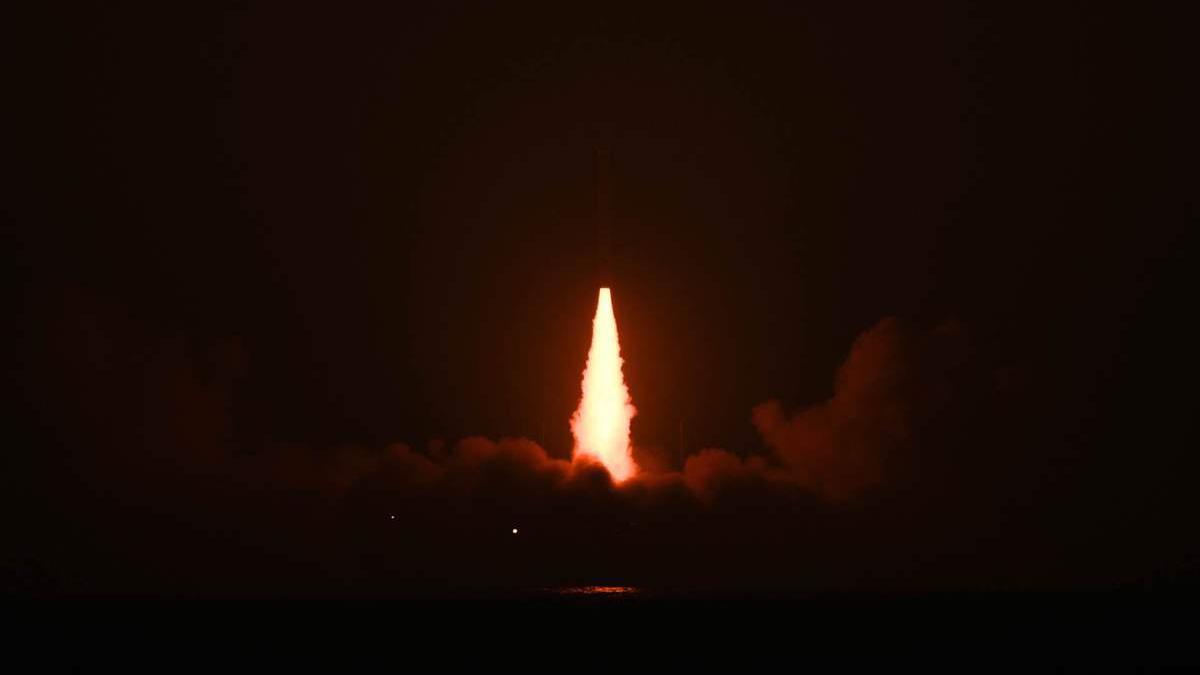
Beijing-based Galactic Energy has successfully launched the year’s first private space mission, marking a significant milestone for China’s commercial aerospace sector. The company’s Ceres 1 solid-propellant rocket blasted off at 4:10 am Friday from a mobile sea platform in the Yellow Sea near Shandong province, deploying four satellites into low-Earth orbit approximately 850 kilometers above the planet.
The mission represents the sixth sea-based launch for Galactic Energy’s Ceres 1 model and demonstrates the growing capabilities of China’s private space industry. The deployed satellites, manufactured by Beijing satellite operator Guodian Gaoke, will join the expanding Tianqi network which now comprises 41 satellites providing global coverage for Internet of Things applications.
According to Galactic Energy, the Tianqi constellation supports critical data collection across multiple sectors including forestry management, agricultural monitoring, tourism services, power generation infrastructure, and environmental protection initiatives. The successful launch continues the remarkable track record of the Ceres 1 rocket, which has now completed 23 flights with 21 successful missions, placing 89 commercial satellites into orbit since its maiden flight in November 2020.
The Ceres 1 stands approximately 20 meters tall with a diameter of 1.4 meters, boasting a liftoff weight of 33 metric tons. The vehicle can deliver payloads of up to 300 kilograms to sun-synchronous orbits at 500 kilometers altitude or carry 350-kilogram payloads to low-Earth orbits at 200 kilometers.
Looking ahead, Galactic Energy is preparing for the inaugural flight of its larger Ceres 2 solid-propellant rocket from the Jiuquan Satellite Launch Center. This development occurs alongside other Chinese private aerospace companies advancing their launch capabilities, including Orienspace with its Gravity 2 rocket, Deep Blue Aerospace’s Nebula 1, and Space Pioneer’s TL 3 vehicle.
In a separate government space achievement, China launched a Long March 2C rocket on Thursday afternoon from Jiuquan, successfully deploying Algeria’s AlSat-3A remote-sensing satellite. Developed by the China Academy of Space Technology, the satellite will provide critical data for land-use planning and disaster management under a bilateral agreement signed in July 2023, marking another milestone in Sino-Algerian space cooperation following the 2017 launch of the Alcomsat-1 communications satellite.