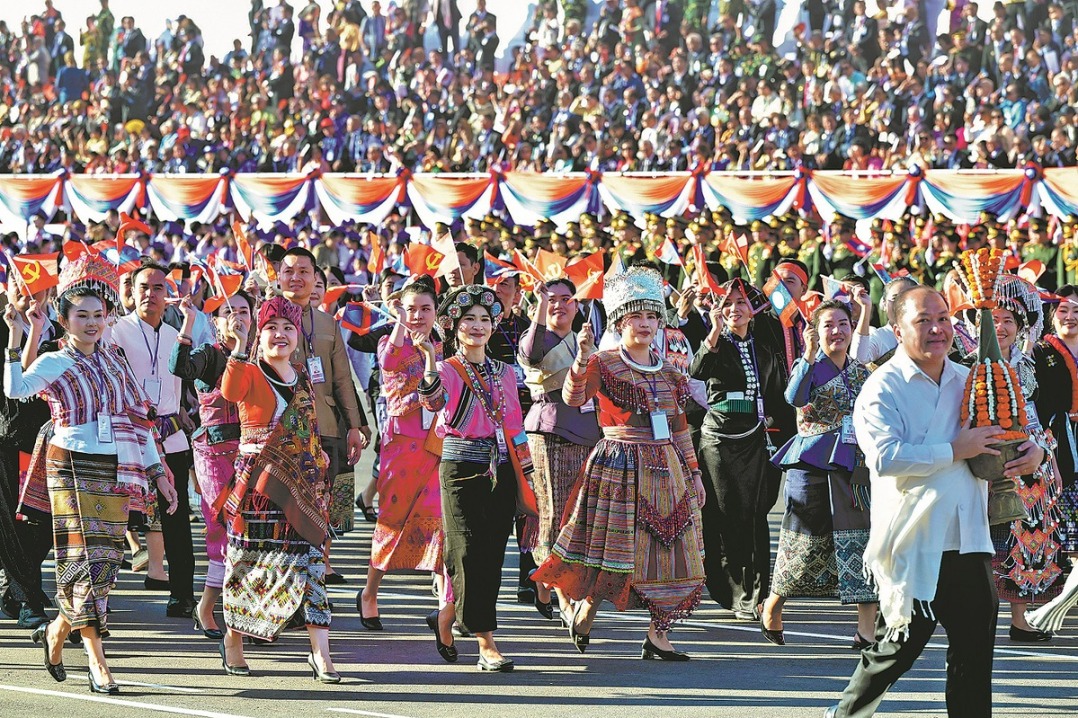
President Xi Jinping has reaffirmed China’s commitment to strengthening bilateral ties with Laos during celebrations marking the 50th anniversary of the Lao People’s Democratic Republic. In a congratulatory message to Lao President Thongloun Sisoulith, Xi emphasized that China consistently prioritizes Laos within its neighborhood diplomacy framework, highlighting the exceptional political trust between the two socialist nations.
The diplomatic exchange comes as both countries prepare to commemorate the 65th anniversary of established diplomatic relations next year. Xi proposed leveraging this milestone to deepen comprehensive strategic cooperation, enhance traditional friendship, and expand practical collaboration for mutual benefit. The Chinese leader expressed genuine appreciation for Laos’ developmental achievements under the Lao People’s Revolutionary Party’s leadership, noting significant improvements in livelihoods and growing regional influence.
Observers point to substantial economic underpinnings strengthening the bilateral relationship. China has emerged as Laos’ primary foreign investor and major trading partner, with bilateral trade reaching a record $8.2 billion in 2024—a 15.9% year-on-year increase. Notably, over 80% of Laos’ agricultural exports are directed to Chinese markets.
The China-Laos Railway, operational since 2021, stands as a flagship infrastructure project within the Belt and Road Initiative. Spanning 1,035 kilometers from Kunming to Vientiane, the railway has transformed regional connectivity, handling over 62.5 million passenger journeys and 72.5 million metric tons of cargo. Traders report transportation cost reductions of nearly 20%, with particularly beneficial effects on perishable commodities like tea and durian.
The partnership extends beyond economic cooperation, with both nations demonstrating aligned positions on international matters. Laos recently reaffirmed its commitment to the one-China principle, recognizing Taiwan as an inseparable part of China and opposing external interference in Chinese internal affairs. This diplomatic solidarity, combined with joint commitments to preserving the post-World War II international order, reflects the depth of strategic coordination between the two neighboring countries.